

Search engine optimization is one of the most talked about marketing strategies in business. For small business owners, it is often presented as the ultimate solution. Rank on Google and customers will magically appear. The reality is more complicated, and this confusion is exactly why many businesses end up frustrated, disappointed, or convinced that SEO does not work.
SEO does work. In fact, when applied at the right time, it can be one of the most powerful growth channels available. The problem is not SEO itself. The problem is timing. Many small businesses pursue SEO too early, before their websites, offers, and conversion systems are ready to support it.
This is where the tension between SEO and paid ads becomes important. Business owners are frequently forced to choose between investing in long term organic growth or putting money into Google Ads and social media advertising for immediate results. Both approaches have value, but they serve very different purposes at different stages of a business.
SEO is a long game. It relies on authority, trust, consistent content, and strong user experience. Paid ads are immediate. They generate traffic the same day, reveal what works quickly, and provide the data needed to make smart decisions. Understanding when SEO makes sense for a business means understanding where your business is right now, not where you hope it will be in the future.
For many small businesses, the real question is not whether SEO is worth it. The real question is whether the business is ready for SEO.
When Does SEO Make Sense for a Business (And When It Doesn’t)
When does SEO make sense for a business? It makes sense when the business is stable enough to support a long term growth strategy and patient enough to let results compound over time. SEO is not designed to deliver instant wins. It is designed to build authority, trust, and visibility gradually, which is why it becomes most effective after the core foundations of a business are already in place.
SEO works best when a website already converts visitors into leads or sales, when offers have been tested and proven, and when the business can consistently serve demand. In this stage, SEO amplifies what is already working. It reduces reliance on paid traffic, increases brand credibility, and creates sustainable visibility that grows month after month.
The problem is that many businesses attempt SEO long before they reach this point. SEO for early stage businesses often fails because the fundamentals are not ready. New businesses usually lack historical data, brand recognition, and conversion insights. Their websites are still evolving, their messaging is unclear, and their offers have not been validated in the market. In these conditions, SEO struggles to deliver meaningful results, not because the strategy is flawed, but because the business is not yet prepared for it.
This is where SEO readiness becomes critical. A business that is ready for SEO has clarity on its audience, a website that guides visitors toward clear actions, and proof that traffic can be turned into revenue. Without this readiness, organic traffic simply exposes weaknesses. More visitors arrive, but few convert, making SEO appear ineffective and expensive.
Starting SEO too early also comes with a real cost. Time and resources are invested into content, optimization, and link building while the business still needs immediate cash flow and fast feedback. Instead of learning what customers respond to, the business waits months for rankings that may not translate into sales. In some cases, early SEO can even slow growth by diverting attention from paid channels that provide quicker insights and measurable returns.
SEO becomes powerful when it is used at the right moment. When the business has traction, when the website performs well, and when the company can afford to think long term. Before that point, the smarter move is to focus on readiness. Once readiness is achieved, SEO stops being a gamble and starts becoming a reliable growth engine.
Why SEO Doesn’t Work for Many Small Businesses
One of the most common questions business owners ask is why SEO does not seem to deliver results for them. This concern is especially common among startups and young companies, which explains why the phrase why SEO does not work for new businesses appears so often in search queries. The truth is uncomfortable but important. SEO usually fails not because the strategy is ineffective, but because the business itself is not yet built to support it.
A major issue is unrealistic timelines. Many small businesses expect SEO to generate leads within weeks. SEO does not work that way. Search engines reward consistency, authority, and trust over time. When a business needs immediate sales to survive, waiting several months for organic visibility creates pressure and disappointment. This mismatch between expectations and reality leads many to abandon SEO before it has a chance to mature.
Low brand trust is another critical factor. New businesses are largely unknown online. They have few reviews, limited mentions across the web, and minimal authority signals. Search engines prioritize brands that demonstrate reliability and relevance. Without trust, even well optimized content struggles to rank, and when it does, users are less likely to convert because the brand feels unfamiliar.
The lack of historical data also plays a significant role. Established websites benefit from years of user behavior signals, content performance, and backlink history. New businesses start from zero. There is no data to indicate which pages convert, which keywords attract buyers, or which messages resonate. SEO depends heavily on learning from this data, and without it, progress is slow and uncertain.
Poor website performance further compounds the problem. Many small business websites are slow, confusing, or unclear in their messaging. They lack strong calls to action, trust elements, and logical user journeys. When SEO sends traffic to these sites, visitors leave without taking action. This creates the illusion that SEO does not work, when in reality the website is failing to do its job.
When these factors are combined, the pattern becomes clear. SEO is not broken. The business foundation is. SEO magnifies what already exists. If the brand is weak, the offer unclear, and the website ineffective, SEO will not fix those issues. It will simply expose them. For SEO to succeed, the underlying business must first be ready to receive and convert the attention that organic traffic brings.
SEO vs Paid Ads Which Should Small Businesses Start With
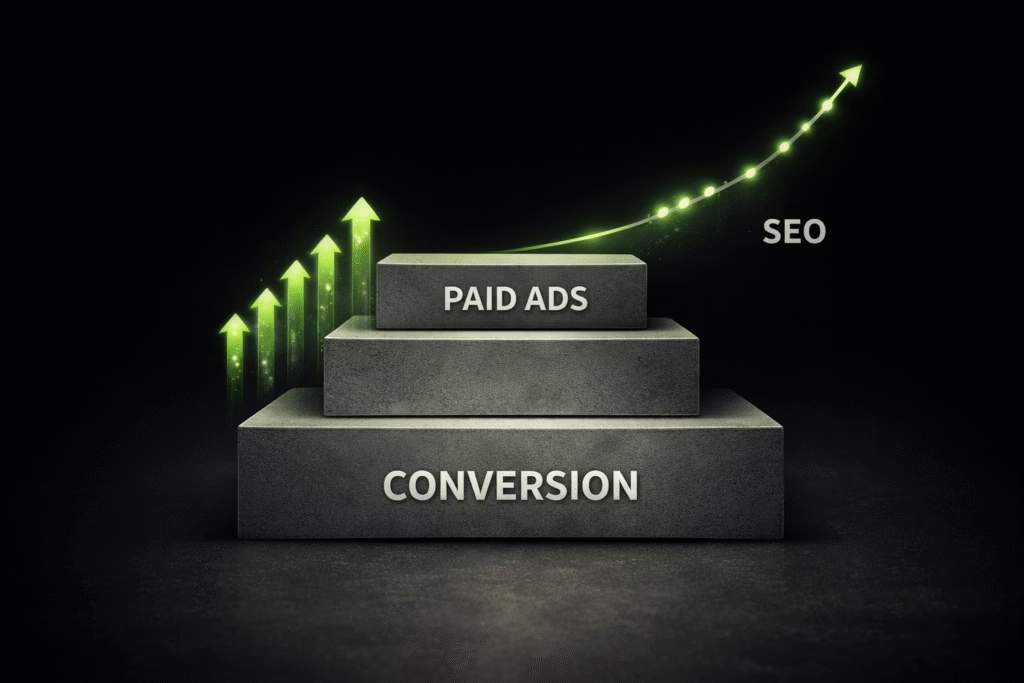
The debate around SEO vs paid ads is one of the most important decisions small businesses face when planning their marketing strategy. Both channels can drive growth, but they are built for different stages of a business. Understanding this difference is essential, because choosing the wrong channel at the wrong time can slow growth or even threaten survival.
Paid ads offer speed and predictability. With Google Ads and social media advertising, a business can launch a campaign and start seeing traffic the same day. Results are measurable, budgets are controllable, and performance data arrives quickly. This immediacy allows businesses to test offers, refine messaging, and understand customer behavior without waiting months for visibility. For small businesses that need leads or sales now, paid ads provide a level of control that SEO cannot match.
SEO, on the other hand, is designed for compounding returns over time. Instead of paying for each click, businesses invest in content, optimization, and authority building that continues to generate traffic long after the work is done. When SEO gains momentum, it can reduce reliance on paid advertising, lower acquisition costs, and strengthen brand credibility. However, this compounding effect takes time to develop and requires a stable foundation to be effective.
This is why survival must come before scale. Early stage businesses need immediate feedback and consistent cash flow to stay afloat. Paid ads help answer critical questions quickly. Do people want this offer? Does the message resonate? Does the website convert visitors into customers? SEO cannot provide these answers fast enough for a business that is still finding its footing.
Once survival is secured and the fundamentals are proven, scaling becomes the priority. At that point, SEO becomes a powerful complement to paid ads. It reinforces brand presence, captures long term demand, and builds a sustainable growth engine. The mistake many small businesses make is trying to scale before they have survived. Choosing paid ads first and SEO later is not a rejection of SEO. It is a strategic decision based on timing and business reality.
Should I Do SEO or Google Ads First?
Should I do SEO or Google Ads first is a question many small business owners ask when deciding how to invest limited marketing budgets. The answer depends less on preference and more on the need for clarity and speed. In most cases, Google Ads and Facebook Ads should come first because they provide immediate insight into how the market responds.
Paid advertising delivers fast data. Campaigns can be launched within days, and results begin to appear almost instantly. Businesses can see which keywords attract clicks, which messages generate interest, and which audiences are willing to take action. This level of visibility allows for rapid learning and adjustment, something SEO cannot offer at the early stage.
Paid traffic also plays a critical role in validating demand. When people click an ad, fill out a form, make a call, or complete a purchase, it confirms that the offer solves a real problem. If paid traffic does not convert, the issue is rarely traffic volume. It is usually the offer, the messaging, or the website experience. Identifying these gaps early prevents costly mistakes later.
SEO should follow proof, not hope. Investing in long term organic growth before knowing what converts is risky. Without validation, SEO efforts may focus on the wrong keywords, promote untested offers, or drive traffic to pages that do not persuade visitors to act. By using Google Ads and Facebook Ads first, businesses gain the evidence needed to guide SEO strategy with confidence.
When paid campaigns show consistent results, SEO becomes far more effective. The data gathered from ads informs content topics, keyword priorities, and conversion paths. Instead of guessing what users want, businesses build SEO around proven demand. This sequence transforms SEO from a gamble into a strategic investment grounded in real performance.
Why Google Maps SEO Works Faster for Local Businesses
For many service based companies, Google Maps plays a critical role in an effective local business marketing strategy. Unlike traditional organic search results, Maps listings are designed to capture users who are ready to take action. People searching on Maps are often looking for a nearby solution, which makes this channel one of the highest intent sources of traffic available to local businesses.
Maps searches attract users who are prepared to call, visit, or request directions. This high intent means fewer clicks are needed to generate leads compared to standard website traffic. Instead of browsing, users are actively seeking a provider in their area, making Maps a powerful tool for businesses that rely on local customers.
Google Maps also builds trust faster than traditional SEO. Listings display reviews, ratings, photos, business hours, and location information directly in search results. These trust signals help users make decisions quickly, even if they have never heard of the brand before. For new businesses, this visibility can compensate for the lack of organic authority that usually takes time to develop through content and backlinks.
As part of a broader local business marketing strategy, Google Maps SEO serves as an ideal bridge between paid ads and full SEO. It provides quicker visibility than organic rankings while still delivering organic style benefits without paying for every click. Businesses can use Maps to generate consistent leads, gather reviews, and strengthen credibility while they continue refining their website and testing offers through paid campaigns.
Once this foundation is established, transitioning into full SEO becomes more effective. The insights gained from Maps performance, customer behavior, and local demand help guide long term content and optimization efforts. In this way, Google Maps SEO supports both short term survival and long term growth, making it a practical starting point for local businesses building toward sustainable visibility.
The Real Reason SEO Fails Website Conversion Problems
Many businesses believe SEO fails because they are not ranking high enough. In reality, the issue usually appears much earlier in the journey. This is why website conversion before SEO is one of the most critical principles small businesses overlook. Traffic alone does not grow a business. Conversions do.
The difference between traffic and conversions is simple but often ignored. Traffic refers to the number of visitors arriving on a website. Conversions refer to what those visitors do once they arrive. Calling, filling out a form, clicking WhatsApp, booking an appointment, or making a purchase are the actions that generate revenue. SEO focuses on increasing traffic, but it does not guarantee conversions. Without a clear path for users to take action, more visitors simply mean more missed opportunities.
This is why ranking higher does not fix broken funnels. A funnel is the journey a visitor takes from landing on a page to becoming a customer. If that journey is confusing, slow, or unconvincing, higher rankings only amplify the problem. SEO brings attention. It does not repair unclear messaging, weak offers, or poor user experience. When businesses push SEO before fixing these issues, they often conclude that SEO does not work, when in fact the website is failing to convert interest into action.
Poor user experience plays a major role in killing return on investment. Slow loading pages frustrate users and increase bounce rates. Complicated layouts make it hard for visitors to understand what the business offers. Weak calls to action fail to guide users toward the next step. On mobile devices, where most traffic now comes from, these problems are even more damaging. Every extra second of load time or moment of confusion increases the likelihood that a visitor will leave.
When SEO sends traffic to a site with these issues, the result is predictable. Costs rise, frustration grows, and confidence in digital marketing declines. The reality is straightforward and uncomfortable. More traffic to a non converting site equals higher losses. Until the website is designed to capture and convert demand, SEO will always underperform. Fixing conversion first turns SEO from a gamble into a growth strategy that actually delivers returns.
Traffic vs Conversions The Mistake Small Businesses Make
Many business owners ask the question is SEO worth it for small businesses after months of seeing traffic increase without a matching rise in leads or sales. This is where frustration sets in. SEO begins to feel slow, expensive, and ineffective. In most cases, the problem is not SEO itself. The problem is that conversion has been ignored.
Traffic without conversion creates a false sense of progress. Page views go up, impressions increase, and rankings improve, but revenue stays the same. When this happens, business owners naturally conclude that SEO is not worth the investment. What they are really experiencing is the result of sending visitors to a website that is not designed to persuade, guide, or close.
This mistake is common among small businesses because traffic is easier to measure than conversions. Seeing numbers grow feels productive. Conversions require deeper thinking about user behavior, messaging clarity, trust signals, and user experience. Without these elements, even highly targeted traffic will leave without taking action, making SEO appear ineffective.
Conversion rate optimization changes everything. When a website is built to convert, every visitor becomes more valuable. Clear messaging helps users understand the offer quickly. Strong calls to action tell them exactly what to do next. Faster load times and mobile friendly design reduce friction. Trust elements such as testimonials, reviews, and clear contact information increase confidence.
Once conversion is prioritized, SEO starts to feel very different. The same amount of traffic produces more leads, more calls, and more sales. Instead of asking whether SEO is worth it for small businesses, the question becomes how to get more of the right traffic to a site that already performs. This shift is what turns SEO from a disappointing experiment into a reliable growth channel.
SEO Readiness Checklist Is Your Business Ready for SEO
Before investing time and money into organic search, every business should run through a clear SEO readiness checklist. This step alone separates companies that benefit from SEO from those that end up disappointed. SEO is most effective when it supports an already functioning business model, not when it is expected to create one from scratch.
The first indicator of readiness is consistent leads or sales. This does not mean explosive growth, but it does mean reliability. A business that can already generate inquiries, bookings, or purchases has proof that there is demand for its offer. SEO works best when it amplifies existing traction rather than trying to manufacture interest where none has been confirmed.
Proven offers are the next requirement. A proven offer is one that people are already willing to pay for or commit to. If an offer has been tested through paid ads, referrals, or direct outreach and consistently converts, SEO can help scale it. Without this proof, SEO efforts risk driving traffic to messaging that has not been validated, slowing progress and increasing costs.
Functional conversion paths are also essential. Visitors must know exactly what to do when they land on the website. Calling, submitting a form, clicking WhatsApp, or purchasing should be obvious and easy. When these paths are broken or unclear, SEO traffic will not turn into results. Conversion clarity must come before traffic growth for SEO to succeed.
Finally, a business must have the ability to wait and invest. SEO is not a quick fix. It requires patience, consistency, and ongoing effort. Businesses that rely on immediate returns for survival often struggle with this timeline. Those that can commit resources and allow results to build gradually are far more likely to see strong returns.
This SEO readiness checklist is not meant to discourage businesses. It is meant to protect them. Companies that meet these criteria are positioned to benefit from SEO as a long term growth channel. Those that do not are better served by focusing on conversion, paid traffic, and offer validation first. This distinction filters serious prospects from those who are not yet ready, saving time, money, and expectations on both sides.
The Correct Growth Order for Small Businesses
Sustainable growth does not happen by chance. It follows a clear sequence that prioritizes stability before expansion. Many small businesses reverse this order by chasing traffic before fixing the systems meant to convert that traffic. The correct growth order for small businesses acts as a framework that reduces risk, improves decision making, and ensures that every marketing investment builds on a solid foundation.
This framework begins with conversion, moves through validation, and ends with scale. When followed in the right order, it allows businesses to grow predictably instead of relying on hope or assumptions. Skipping steps may create short term visibility, but it often leads to wasted budgets and stalled growth.
Step 1 Website Conversion Optimization Before SEO
The first and most important step is conversion rate optimization. Before investing in SEO or increasing traffic, a business must ensure that its website is capable of turning visitors into leads or customers. Conversion rate optimization focuses on removing friction and guiding users toward clear actions.
Messaging clarity is essential. Visitors should immediately understand what the business offers, who it is for, and how it solves a problem. Confusing headlines, vague descriptions, or competing messages cause users to hesitate and leave. Clear messaging builds confidence and sets expectations from the first interaction.
Trust signals play a major role in decision making. Reviews, testimonials, case studies, certifications, and visible contact information reassure visitors that the business is legitimate and reliable. Without these signals, even interested users may delay or avoid taking action.
Lead capture must be simple and obvious. Forms, call buttons, and WhatsApp links should be easy to find and easy to use. Every extra step reduces the likelihood of conversion. A well optimized site makes the next action feel natural rather than forced.
Mobile usability cannot be ignored. Most users now access websites from mobile devices. If pages load slowly, buttons are hard to click, or layouts break on small screens, conversions drop dramatically. Conversion rate optimization ensures that the experience is smooth across all devices.
By focusing on conversion first, businesses create a foundation where every visitor has value. Once this foundation is in place, increasing traffic through SEO becomes a logical and profitable next step rather than a risky experiment.
Step 2 Validate Offers With Paid Traffic
After conversion rate optimization, the next step in the growth framework is validation. This is where the SEO vs paid ads discussion becomes practical rather than theoretical. Paid traffic acts as a testing lab that allows businesses to experiment, learn, and adjust quickly before committing to long term strategies.
Paid ads reveal buyer behavior faster than SEO because they produce immediate interaction. With Google Ads and social media campaigns, businesses can see which keywords attract attention, which messages generate clicks, and which offers motivate action. This feedback arrives in days, not months. It helps businesses identify what resonates with real customers instead of relying on assumptions.
Paid traffic also exposes weaknesses early. If users click ads but do not convert, the issue becomes clear. It may be the offer, the pricing, the messaging, or the landing page experience. Identifying these problems through ads is far less costly than discovering them after months of SEO work. This is why paid ads are essential for validation. They provide clarity, speed, and measurable proof.
Once paid campaigns show consistent performance, the business gains confidence. There is evidence of demand, understanding of buyer intent, and data to guide future decisions. At this stage, SEO planning becomes informed and strategic rather than speculative.
Step 3 Use SEO as a Long Term Growth Strategy
With validated offers and a converting website, SEO can finally be used as a long term growth strategy. This is where its true strength becomes visible. Instead of paying for every click, businesses build assets that continue to attract traffic and leads over time.
One of the key advantages of SEO is a lower cost per lead in the long run. While the initial investment may be higher, organic traffic does not stop when ad budgets pause. As rankings improve and content gains authority, each new lead costs less, improving overall profitability.
SEO also strengthens brand authority. Appearing consistently in search results builds familiarity and trust. Users begin to recognize the brand as a credible option, which increases conversion rates across all channels, including paid ads and referrals.
Perhaps the greatest benefit is compounding organic traffic. Each piece of optimized content contributes to overall visibility. Over time, traffic grows not in a linear way, but in layers. Older content continues to perform while new content adds momentum. This compounding effect creates stability and resilience that paid ads alone cannot provide.
When SEO is introduced at this stage, it stops being a gamble and becomes a strategic investment. It supports sustainable growth, reinforces brand presence, and turns proven demand into long term advantage.
When SEO Is Worth It for Small Businesses
The question is SEO worth it for small businesses usually comes up after frustration. Owners invest time and money, wait for results, and see little return. The honest answer is that SEO is absolutely worth it for small businesses, but only when the foundations are already strong. Without those foundations, SEO feels slow and ineffective. With them, it becomes one of the most reliable growth channels available.
SEO works best once a business has clarity. This includes a clear understanding of the target audience, a proven offer, and a website that consistently converts visitors into leads or sales. When these elements are in place, SEO stops being an experiment and starts functioning as a growth system. Traffic increases and that traffic has a purpose.
SEO amplifies what already converts. If a landing page performs well with paid traffic, SEO can multiply those results over time. If a service page generates calls and inquiries, SEO helps it reach a wider audience without increasing advertising spend. On the other hand, if a page does not convert, SEO simply brings more people to a broken experience. This is why conversion comes before rankings.
SEO also rewards patience and consistency. Results do not appear overnight, but they build steadily. Businesses that publish valuable content, optimize their sites properly, and maintain quality over time benefit from growing visibility and trust. Each improvement adds to the last, creating momentum that compounds rather than resets.
For small businesses that are ready, SEO becomes an investment rather than a cost. It supports long term stability, reduces dependency on paid traffic, and strengthens brand presence in the market. When the groundwork is done correctly, SEO delivers returns that continue long after the initial effort, making it a powerful tool for sustainable growth.
Why We Recommend a Website Audit Before SEO
Many of the common SEO mistakes small businesses make begin before any optimization work even starts. One of the biggest is skipping a proper website audit. Without an audit, SEO strategies are built on assumptions rather than facts, and assumptions are expensive.
Skipping audits causes SEO failure because it removes visibility into what is actually happening on a website. Businesses may assume their pages are clear, their site is fast, and their conversion paths work as intended. In reality, there are often technical issues, unclear messaging, broken user journeys, or hidden friction points that silently block results. SEO can bring traffic, but it cannot compensate for problems that prevent users from taking action.
Assumptions cost money because they lead to misplaced effort. Content may be created for the wrong keywords. Pages may be optimized that do not convert. Time and resources are spent driving traffic to experiences that fail to meet user expectations. When this happens, SEO feels like a poor investment, not because it lacks value, but because the foundation is flawed.
Data beats opinions in every successful SEO strategy. A website audit replaces guesswork with evidence. It reveals how users interact with pages, where they drop off, and what prevents conversions. It identifies technical weaknesses, usability issues, and missed opportunities that cannot be seen without proper analysis. Decisions based on data lead to focused improvements that actually move the needle.
Recommending a website audit before SEO is not about delaying progress. It is about protecting investment. Businesses that audit first gain clarity, avoid common SEO mistakes, and build strategies rooted in reality. This approach ensures that when SEO work begins, it is aligned with how users behave, how the website performs, and how growth can be achieved efficiently.
What a Website Conversion and SEO Readiness Audit Covers
A proper website conversion and SEO readiness audit is designed to answer one essential question. Is the business truly prepared for SEO, or would traffic be wasted if it arrived today? This audit exists to ensure website conversion before SEO and to establish real SEO readiness based on data rather than assumptions.
The first area the audit examines is the conversion flow. This looks at how visitors move through the website from the moment they land on a page to the point where they take action. It identifies friction points, drop offs, and moments of confusion that prevent users from calling, submitting a form, or completing a purchase. A clear and logical conversion flow ensures that incoming traffic has a defined purpose.
Offer clarity is the next focus. Many websites fail to clearly communicate what they offer, who it is for, and why it matters. The audit reviews headlines, page structure, and messaging to determine whether visitors can quickly understand the value being presented. Without clear offers, even highly targeted traffic will hesitate and leave.
Technical basics are also assessed. This includes page load speed, mobile usability, site structure, and fundamental performance issues that affect user experience and search visibility. Technical weaknesses often go unnoticed but can silently reduce conversions and limit SEO potential.
Finally, the audit reviews SEO foundations. This covers on page structure, keyword alignment, internal linking, and basic search visibility signals. The goal is not to rank immediately, but to confirm that the site is capable of supporting future SEO efforts without structural barriers.
Together, these elements provide a complete picture of readiness. A website conversion and SEO readiness audit removes guesswork and highlights exactly what must be fixed before scaling traffic. By addressing these areas first, businesses ensure that when SEO begins, it works with the site rather than against it.
Final Thoughts SEO Is a Multiplier Not a Shortcut
SEO is often treated as a magic solution that can fix slow sales, weak branding, or an underperforming website. This expectation is what leads many businesses to disappointment. SEO is not magic. It is a system that rewards preparation, clarity, and consistency over time.
Timing matters more than tactics. When SEO is introduced too early, it exposes gaps rather than creating growth. When it is introduced at the right stage, it amplifies everything that already works. This is why understanding when to invest in SEO is just as important as knowing how SEO works.
Conversion always comes first. A website must be able to turn attention into action before additional traffic is added. Without clear messaging, trust signals, and functional conversion paths, SEO traffic becomes a cost rather than an asset. Fixing conversion issues first ensures that every new visitor has value.
Once the fundamentals are solved, traffic begins to compound. SEO builds momentum slowly, but it does not reset. Each improvement adds to the last. Content continues to attract visitors, authority strengthens, and visibility grows over time. This compounding effect is what makes SEO powerful, but only after the foundation is strong.
In the end, SEO should be viewed as a multiplier, not a shortcut. It multiplies proven offers, effective websites, and clear strategies. Businesses that respect this order benefit from sustainable growth, stronger brands, and marketing systems that work together rather than against each other.
Audit Your Website Before SEO
Before You Invest in SEO, Make Sure Your Website Is Ready
SEO should never be a guessing game. Before spending months creating content or chasing rankings, it is critical to confirm that your website is actually prepared to turn traffic into results. A website that is not ready will waste organic traffic, time, and budget.
A website conversion audit helps you find out if SEO will actually work for your business. It reveals whether your current pages are clear, persuasive, and structured to guide visitors toward action. Instead of assumptions, you get a clear picture of what is helping or hurting performance.
The audit also identifies conversion leaks that silently drain traffic. These include confusing messaging, weak calls to action, slow load times, and broken user journeys. Fixing these issues ensures that every visitor has a higher chance of becoming a lead or customer.
Most importantly, you receive clear, data driven next steps. You will know exactly what to fix, what to improve, and when SEO makes sense for your business. This clarity allows you to invest confidently rather than hoping for results.
Take the Next Step Free Website Conversion Audit DM “AUDIT” Visit neksasdigital.com
This is the starting point for businesses that want growth backed by strategy, not shortcuts.
