

A practical guide for home-care agency leaders and marketers

Families Begin Evaluating Trust Before They Contact You
Choosing home care is not an ordinary purchasing decision. A family may be responding to a hospital discharge, a fall, changes in memory, caregiver exhaustion or the realization that an older relative is no longer safe alone. The decision often carries fear, guilt, urgency and disagreement between family members.
Before anyone schedules a consultation, the family is already assessing risk. Can this agency be trusted inside the home? Are its caregivers properly screened and supported? Will the agency communicate when something changes? What happens when a caregiver is absent? Are the costs and service limitations going to become an unpleasant surprise?
A polished website cannot answer those questions through reassuring adjectives alone. Words such as compassionate, reliable and professional appear on almost every home-care website. Trust grows when a provider supports those promises with specific, verifiable information.
Effective home care marketing therefore begins before lead generation. It gives families enough clarity to decide whether the agency understands their situation, operates responsibly and deserves a place on their shortlist.
This guide explains how home-care providers can build credibility before the first consultation through transparent website content, authentic proof, clear care processes and communication designed around the family decision journey.
Why Trust Is the Real Conversion Barrier in Home Care
Most families are not merely comparing service packages. They are considering whether to invite an unfamiliar person into a private home and depend on that person for safety, dignity and daily support. The perceived cost of making the wrong choice is far greater than the hourly rate.
That changes the purpose of marketing. A family may visit several agency websites, read reviews, check credentials, ask a healthcare professional for recommendations and compare how quickly each provider responds. Every unanswered question adds uncertainty. Every vague claim pushes the burden of verification back onto the family.
Trust Is Built Through Evidence, Not Adjectives
An agency cannot prove compassion by describing itself as compassionate. It can demonstrate what compassion looks like: how caregivers are matched, how preferences are recorded, how dignity is protected and how concerns are escalated. Reliability becomes credible when the agency explains scheduling, supervision, backup coverage and communication.
The Family and the Care Recipient May Need Different Reassurance
An adult child may focus on safety, oversight and updates. The person receiving care may worry about independence, privacy and losing control over routines. Strong home care marketing addresses both audiences without treating the older adult as a passive subject of the family’s decision.
| Core principle: Trust-building content should reduce uncertainty while preserving the care recipient’s dignity, preferences and role in the decision. |
10 Ways Home-Care Providers Can Build Trust Before the First Consultation

1. Distinguish Home Care From Home Health Care
Families do not always understand the difference between non-medical home care and Medicare-certified home health services. Using the terms interchangeably may attract traffic, but it can create the wrong expectations.
Explain clearly whether the agency provides companionship, personal care, meal preparation, transportation and help with daily activities; skilled nursing or therapy; or a combination permitted under local licensing. State what the agency does not provide and when another professional or emergency service is required.
For US audiences, coverage also needs careful explanation. Medicare coverage rules for home health services do not automatically apply to ongoing non-medical custodial care. Avoid vague statements such as ‘insurance accepted’ without explaining which services, plans or eligibility conditions are involved.
Medicare’s Care Compare tool separates home health agencies from other provider types and gives consumers access to reported quality information. Visit Medicare Care Compare.
2. Show Credentials Where Families Can Verify Them
Families should not have to request basic credibility information. Display the agency’s correct legal name, service address, contact details, areas served and applicable license or certification information. Where appropriate, link to the relevant regulator or public provider profile.
If the agency is Medicare-certified, explain how families can find it on Care Compare and what the available ratings mean. Do not present accreditation, membership or awards without naming the issuing body and showing that the recognition is current.
CMS says home health star ratings are intended as a first step in evaluating agencies and should be considered alongside patient needs, preferences and other information. Read the CMS quality-rating fact sheet.
Transparency also means acknowledging when a credential does not apply. A non-medical home-care provider should not use clinical language or imagery that implies services it is not licensed to deliver.
3. Explain How Caregivers Are Screened, Trained and Supervised
The caregiver is the service from the family’s perspective. Generic phrases such as ‘fully vetted’ are too vague. Explain the actual process without disclosing personal information or making guarantees no screening method can support.
Depending on local law and the role, this may include identity verification, criminal-history checks, abuse or exclusion checks, reference and employment verification, driving-record review, health requirements and role-specific training. Requirements vary by jurisdiction, so agencies should describe only the checks they genuinely perform.
Trust also depends on what happens after hiring. Describe orientation, ongoing education, supervision, performance monitoring and how families can report a concern. If caregivers are employees rather than independent contractors, explain what that means for scheduling, oversight and accountability where relevant.
The National Institute on Aging’s Caregiver’s Handbook includes questions families can ask before hiring an in-home care provider, reflecting the importance of evaluating qualifications and arrangements carefully. View the NIA Caregiver’s Handbook.
4. Make the Caregiver-Matching Process Visible
Families want more than an available worker. They want someone who can support the person’s needs, routines, communication style, culture and preferences. Explain how the agency assesses the care recipient and selects a caregiver.
Useful matching factors may include experience with the relevant condition, required tasks, language, schedule, location, personality and household preferences. Avoid promising a perfect match. Instead, explain how the agency monitors the relationship and what happens if the match is not working.
Include the care recipient in the process wherever possible. Content that speaks only to the adult child can unintentionally suggest that the older person’s preferences will also be ignored during care.
5. Explain the Entire Care Process Before Asking for a Call
A button that says ‘book a free consultation’ tells the family what to do but not what will happen. Reduce anxiety by showing the journey from first enquiry to the start of care.
- How quickly the agency responds.
- Who conducts the initial conversation or assessment.
- Whether the assessment is in person, virtual or by telephone.
- What information the family should prepare.
- How needs and preferences are documented.
- When the care plan and price estimate are provided.
- How the caregiver is introduced.
- How soon care can realistically begin.
- How the plan is reviewed after service starts.
Specific timelines are more useful than promises of immediate care. If same-day starts are not consistently possible, do not advertise them. Explain which factors affect timing, such as assessment, caregiver availability, authorization or clinical documentation.
6. Be Transparent About Costs, Minimums and Payment Options
Families may hesitate to enquire because they fear a sales conversation without basic price information. Exact rates may depend on location, schedule, care complexity and service type, but that does not justify complete silence.
Where permitted, provide starting rates, typical ranges or a clear explanation of how pricing is calculated. Disclose minimum shift lengths, weekend or holiday differences, cancellation terms, deposits and which tasks may change the rate. Explain whether the agency helps families understand long-term-care insurance, veterans benefits, Medicaid programs or other possible payment sources without promising eligibility.
Price transparency does more than qualify leads. It signals that the agency is willing to discuss difficult details before a family feels committed.
7. Use Authentic Reviews and Testimonials Responsibly
Families often read reviews because they want evidence from people who faced a similar decision. A useful testimonial is specific enough to explain the experience without revealing private health information. It may describe communication, punctuality, caregiver consistency or how the agency responded when a problem occurred.
Do not manufacture reviews, suppress honest negative feedback or publish a testimonial without the necessary permission. Respond to public reviews carefully; thanking someone is safer than confirming that they or their relative received services.
The FTC’s Consumer Reviews and Testimonials Rule addresses fake or deceptive reviews and authorizes civil penalties for knowing violations. Read the FTC guidance.
A small number of genuine, detailed reviews is more credible than a wall of generic praise. Agencies should also monitor recurring concerns and use them to improve operations rather than treating reputation management as a cosmetic exercise.
8. Publish Helpful Content for the Questions Families Are Afraid to Ask
Trust grows when an agency helps before attempting to sell. Build a resource centre around real family decisions, not only service announcements.
- Signs an older relative may need more support at home.
- How to discuss home care without taking away autonomy.
- Questions to ask a home-care agency.
- Home care versus home health care.
- How caregiver matching works.
- What to expect during an in-home assessment.
- How families can prepare for the first week of care.
- What to do when care needs change.
- How respite care supports family caregivers.
Content should avoid diagnosing the reader or using fear to force action. Medical and legal claims require appropriate review. The most effective articles acknowledge uncertainty, offer practical next steps and identify situations that require professional or emergency help.
9. Design the Website for Stressed, Time-Poor Families
A home-care website may be used at night, from a hospital corridor or on a phone while family members compare options. Important information should be easy to find without opening several menus.
Each service page should identify who the service is for, what is included, what is excluded, the service area, likely next steps and a clear contact option. Display a working telephone number and response expectations. Use readable type, meaningful headings, sufficient contrast, descriptive links and image alternatives.
Local trust matters as much as design. Create accurate location or service-area pages, maintain a complete Google Business Profile and keep the agency name, address and telephone details consistent. Do not create thin doorway pages for communities the agency does not genuinely serve.
10. Treat Response Speed and Communication as Part of Marketing
Trust can disappear after the form is submitted. An automated confirmation should say when a human will respond, what will happen next and what to do if the need is urgent. Enquiries should reach a trained person who can answer basic questions without pressuring the family.
Families also want to know how communication will work after care starts. Explain the main contact, office hours, after-hours procedure, update schedule, complaint route and what happens if a caregiver is late or absent.
CMS home health patient-experience measures include communication, courteous and respectful care, discussion of medicines, pain and home safety, and willingness to recommend the agency. Read the CMS overview of home health patient surveys.
The best marketing promise is an operational standard the agency can keep. If communications repeatedly go unanswered after enrollment, no amount of online reassurance will protect the reputation.
A Pre-Consultation Trust Checklist for Home-Care Websites
| Trust question | Evidence the website should provide |
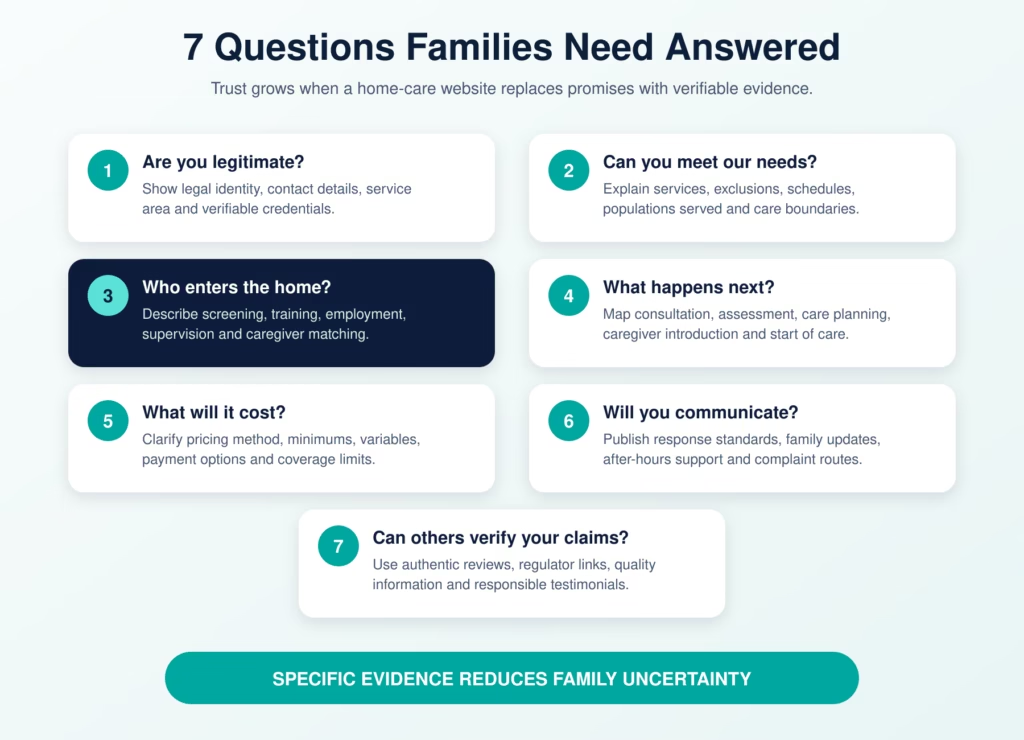
| Are you legitimate? | Legal identity, contact details, service area, licensing or certification and verifiable profiles. |
| Can you meet our needs? | Specific services, exclusions, schedules, populations served and escalation boundaries. |
| Who enters the home? | Screening, training, employment, supervision and caregiver-matching processes. |
| What happens next? | Consultation, assessment, care-plan, introduction and start-of-care steps. |
| What will it cost? | Pricing method, minimums, major variables, payment options and coverage limitations. |
| Will you communicate? | Response standards, family updates, after-hours support and complaint procedures. |
| Can others verify your claims? | Authentic reviews, regulator links, quality information and responsible testimonials. |
How to Measure Whether Trust-Building Content Is Working
Traffic alone cannot show whether families trust an agency. Combine search, behaviour, enquiry and operational measures.
| Stage | Useful measure | What it may reveal |
| Discovery | Qualified organic traffic and local visibility | Whether families can find the agency for relevant needs. |
| Evaluation | Service-page engagement and credential-link clicks | Whether visitors are examining proof and fit. |
| Enquiry | Qualified calls, forms and consultation bookings | Whether the website reduces enough uncertainty to act. |
| Response | Time to human contact and missed-call recovery | Whether the agency delivers its communication promise. |
| Consultation | Show rate and common objections | Whether expectations, price and process are clear. |
| Enrollment | Consultation-to-start conversion | Whether the real service matches the online promise. |
| Reputation | Review themes, complaints and referrals | Whether trust continues after care begins. |
Segment enquiries by service, location and referral source. A high form-completion rate with many unsuitable leads may indicate that service boundaries are unclear. Strong traffic with weak enquiries may signal missing proof, confusing pricing or an inaccessible contact process.
| Measurement principle: The goal is not more enquiries at any cost. It is more informed enquiries from families whose needs the agency can safely and appropriately meet. |
A 30-Day Home-Care Trust-Building Plan
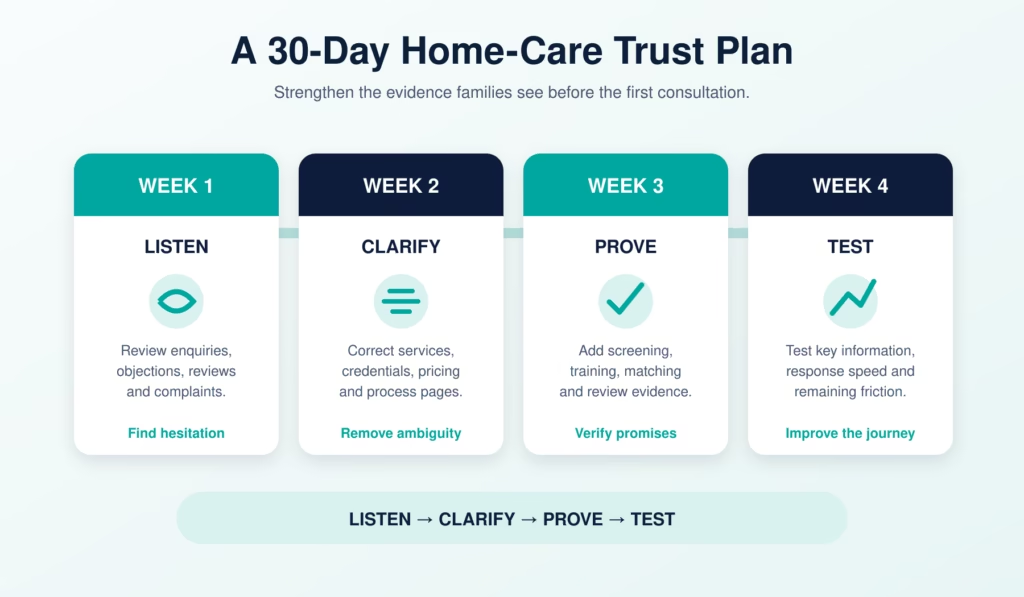
| Week | Focus | Priority actions |
| 1 | Listen | Review enquiries, objections, complaints, reviews and questions asked during assessments. |
| 2 | Clarify | Correct service descriptions, credentials, coverage language, pricing explanations and care-process pages. |
| 3 | Prove | Add screening, training, matching, communication and authentic review evidence. |
| 4 | Test | Ask families to find key information, measure response performance and fix remaining friction. |
Week 1: Identify the Questions Creating Hesitation
Interview intake staff and care managers. Review call notes, website searches, emails, reviews and lost enquiries. Group concerns into safety, fit, cost, process, caregiver quality and communication. These are the subjects the website must answer.
Week 2: Correct Ambiguity and Unsupported Claims
Audit every service page. Remove generic claims that cannot be demonstrated. Clarify home care versus home health, service areas, availability, payment information and the path from enquiry to care. Confirm regulated claims with the appropriate compliance or clinical reviewer.
Week 3: Add Verifiable Trust Evidence
Publish licensing or certification details, screening and training explanations, caregiver-matching information, communication standards and genuine reviews used with permission. Link to public quality or regulator information where relevant.
Week 4: Test the Family Journey
Ask people unfamiliar with the agency to find the cost explanation, services, credentials, screening process and emergency contact information. Submit test enquiries from desktop and mobile devices. Compare promised response times with actual performance and fix the gap.
Home Care Marketing Mistakes That Weaken Trust
- Using compassionate and reliable without explaining what those promises mean.
- Confusing non-medical home care with skilled home health services.
- Hiding licensing, ownership or service-area information.
- Saying caregivers are vetted without describing the process.
- Using stock photographs that imply facilities, staff or clinical services the agency does not have.
- Publishing fake, edited or selectively solicited reviews.
- Avoiding every discussion of price until a sales call.
- Using fear, guilt or loss of independence to pressure families.
- Ignoring the voice and preferences of the person receiving care.
- Promising immediate availability without confirming staffing capacity.
- Collecting sensitive information through unsecured or unnecessarily detailed enquiry forms.
- Responding slowly after promising compassionate, responsive support.
Frequently Asked Questions
How Can a Home-Care Agency Build Trust With Families?
A home-care agency can build trust by explaining its services and limitations clearly, displaying verifiable credentials, describing caregiver screening and supervision, showing how matching and backup care work, using authentic reviews and responding promptly. Every marketing promise should correspond to an operational process the agency can demonstrate.
What Information Should a Home-Care Website Include?
The website should include services, exclusions, service areas, contact information, credentials, caregiver screening and training, the assessment and start-of-care process, pricing methodology, payment options, communication procedures, reviews and a clear explanation of what happens after an enquiry.
What Do Families Look for in a Home-Care Provider?
Families commonly evaluate safety, caregiver qualifications, reliability, communication, service fit, continuity, backup coverage, cost and how much control the care recipient retains. They may also seek recommendations, public quality information and evidence from other families.
Should a Home-Care Agency Publish Its Prices?
When possible, agencies should provide rates, ranges or a clear pricing method. If an exact quote requires assessment, explain the factors that affect price, minimum shifts and possible additional charges. Transparency helps families assess fit before entering a sales conversation.
How Should Home-Care Agencies Use Reviews?
Use genuine reviews from people with real experience and obtain appropriate permission before republishing testimonials. Do not create, buy or suppress reviews. Avoid revealing that a reviewer received care when responding publicly, and use recurring feedback to improve the service.
What Is the Difference Between Home Care and Home Health Care?
Home care often refers to non-medical support such as companionship and assistance with daily activities. Home health care generally involves skilled clinical services delivered under specific eligibility and licensing requirements. Definitions and coverage vary, so providers should describe their actual services precisely.
How Can a Home-Care Agency Improve Enquiry Conversion?
Improve conversion by answering major trust questions before the consultation, clarifying who the service is for, showing verifiable proof, simplifying mobile contact, responding quickly and aligning the consultation with what the website promised. More clarity may reduce unsuitable leads while increasing qualified enquiries.
Trust Begins Before the Family Says Hello
Families do not arrive at a home-care consultation as blank prospects. They bring questions, fears, family dynamics and previous experiences with care. By the time they contact an agency, the website, reviews, public credentials and first response have already shaped what they expect.
Home care marketing succeeds when it makes the agency easier to evaluate honestly. Clear service boundaries show integrity. Caregiver-screening and supervision details demonstrate responsibility. Authentic reviews provide relevant proof. Pricing and process information reduce avoidable uncertainty. Responsive communication shows that the promise of support exists beyond the homepage.
The objective is not to remove every concern. No responsible provider can guarantee a perfect caregiver match, uninterrupted staffing or a specific outcome. The objective is to show families how the agency manages those realities with transparency, preparation and accountability.
Before asking for another enquiry, review the questions your website leaves unanswered. The missing information may be the reason a family never contacts you.
About the Author
| Irene Wanyama is a healthcare and senior-care SEO content writer with professional experience in pharmacy operations, digital marketing and customer behaviour. She creates research-informed content that helps healthcare businesses explain complex services clearly and build trust with their audiences. |
Portfolio and enquiries: neksasdigital.com | WhatsApp Irene
Selected Sources
- National Institute on Aging. The Caregiver’s Handbook.
- Medicare. Care Compare.
- CMS. Quality of Patient Care Star Rating Fact Sheet.
- CMS. Home health agency patient surveys.
- FTC. Consumer Reviews and Testimonials Rule: Questions and Answers.
- FTC. Soliciting and Paying for Online Reviews: A Guide for Marketers.
