

A practical guide for independent pharmacy owners and managers
The First Transaction Is Only the Beginning

Independent pharmacies invest significant time, effort and resources in attracting new customers. They improve their product selection, promote their services and compete on location, price and convenience. Yet too often, the work of winning a customer is considered complete as soon as payment is made and the customer leaves the pharmacy.
But one successful transaction does not create loyalty.
Price, proximity or an urgent health need may bring someone into an independent pharmacy for the first time. Whether that person returns depends on what happens during and after the visit. Did the staff listen carefully? Was the customer treated with respect? Was the service convenient? Did the pharmacy provide a useful reason to come back?
Effective pharmacy customer retention is built through consistently positive experiences, reliable follow-up and trusted relationships. It requires more than a discount card or an occasional promotional message.
This guide explains how independent pharmacies can create a practical retention system that turns satisfactory first visits into repeat business. It explores the service, communication and patient-care strategies that encourage repeat customers, strengthen pharmacy customer loyalty and help the pharmacy become a trusted part of the community.
What Does Customer Retention Mean in an Independent Pharmacy?

Pharmacy customer retention is the ability of an independent pharmacy to keep people returning after their first visit. A first-time buyer has completed one transaction, while a repeat customer has returned for another product, prescription or service. A loyal pharmacy customer goes further: they actively prefer the pharmacy, trust its team and are likely to recommend it to others.
However, not every returning customer is loyal. Some continue visiting because the pharmacy is nearby, their insurance limits their options or transferring prescriptions feels inconvenient.
The terms patient and customer also serve different purposes. Patient is generally more appropriate when discussing prescriptions, counselling and clinical services. Customer applies more broadly to retail and over-the-counter purchases.
Retention Is Not the Same as Loyalty
Retention is measurable behaviour, such as repeat visits or prescription refills. Pharmacy customer loyalty includes preference, trust and willingness to recommend. Someone may therefore be retained without developing genuine patient loyalty. That distinction matters: a competitor offering greater convenience may easily win a customer who returns only because switching currently feels difficult.
Why Continuity Matters in Pharmacy Care
Continuity of pharmacy care can give pharmacists a more complete medication history, strengthen pharmacist-patient relationships and create opportunities to identify adherence problems. It may also support safer, better-coordinated care.
Research found that consistently using one pharmacy was associated with better medication adherence, reduced inappropriate drug use and lower use of other costly health services. Read the study on PubMed.
Why First-Time Pharmacy Customers Fail to Return
A customer may leave without complaining and simply never return. This makes retention problems easy to miss. A pharmacy can continue attracting new people while quietly losing many of them after one or two visits.
- Long or unexplained waits. Waiting becomes more frustrating when no one acknowledges the customer or explains the delay. Accurate expectations often matter as much as speed.
- Transactional service. A technically correct sale can still feel cold or rushed. Customers notice whether staff listen, explain and show genuine interest in resolving their needs.
- Poor availability communication. An out-of-stock item is inconvenient; uncertainty about whether or when it will become available makes the experience worse.
- Inconsistent staff behaviour. Excellent service on one visit and dismissive treatment on the next weakens trust in the pharmacy as a whole.
- No reason to return. If customers are not told about refill support, medication synchronization, delivery or other useful services, they may have no reason to choose the pharmacy again.
- Privacy concerns. Discussing sensitive information where other customers can hear can damage confidence immediately.
| In short: Customers commonly leave because of inconvenience, weak communication, inconsistent service, stock problems, privacy concerns or a lack of meaningful follow-up. |
9 Pharmacy Customer-Retention Strategies That Build Long-Term Loyalty
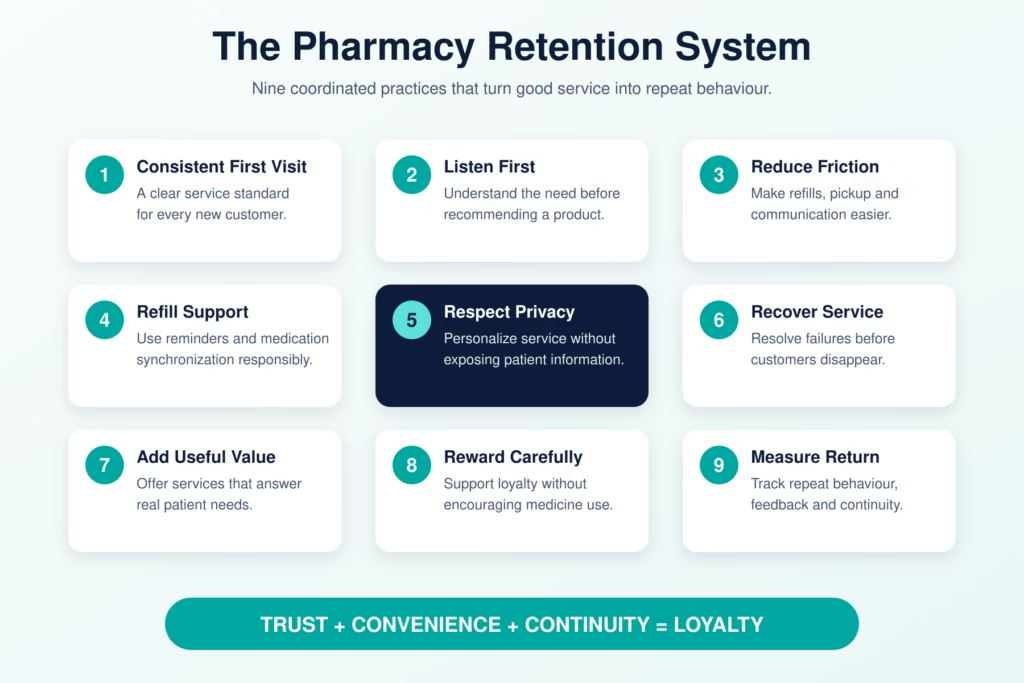
1. Create a Consistent First-Visit Experience
The first visit teaches a customer what future visits are likely to feel like. A simple service standard helps the pharmacy deliver a reliable experience even when the team is busy.
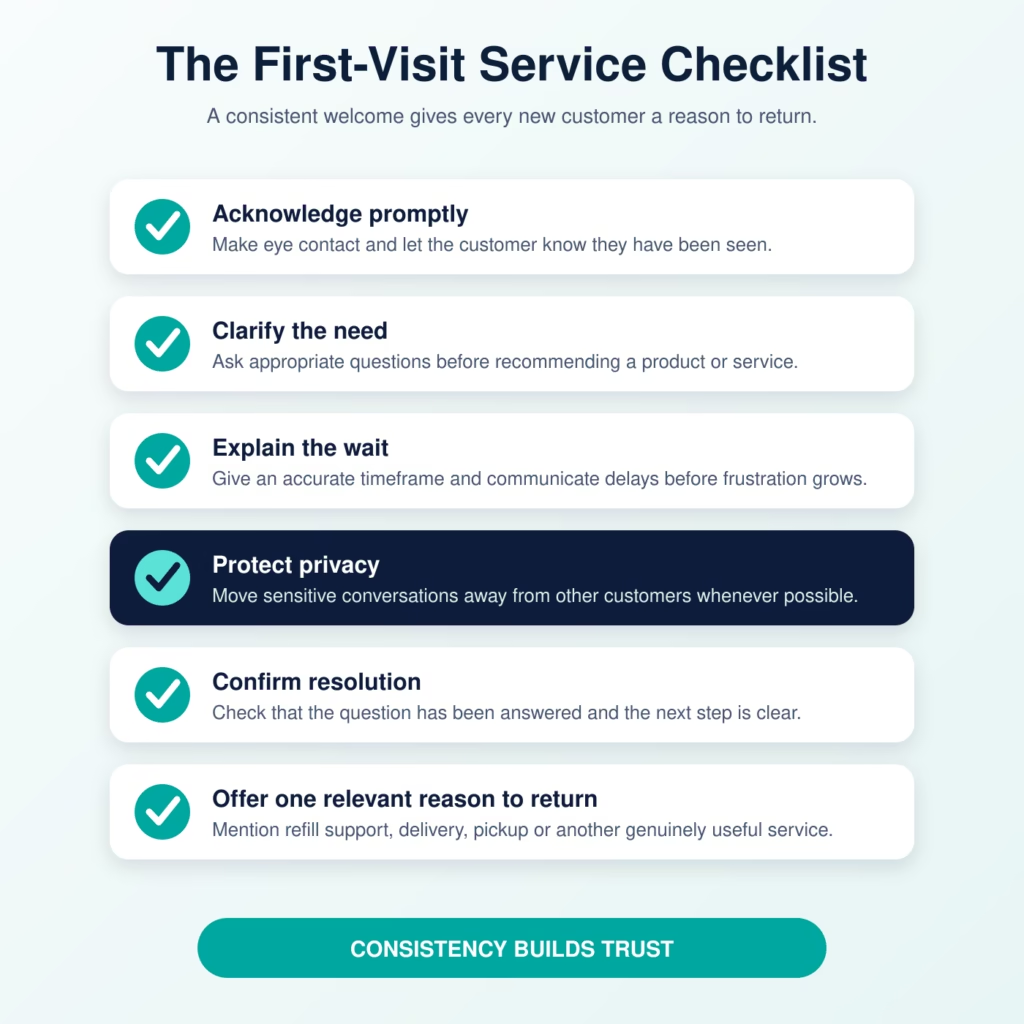
A strong first-visit process should include:
- Acknowledging the customer promptly.
- Clarifying what they need instead of making assumptions.
- Explaining expected wait times and possible delays.
- Protecting privacy during sensitive conversations.
- Checking that the question or problem has been resolved.
- Offering an appropriate next step, such as refill support or delivery information.
Consistency does not mean turning every interaction into a rigid script. It means agreeing on the minimum standard every customer should receive, regardless of the employee, shift or workload.
2. Train Staff to Listen Before Recommending Products
Good pharmacy service begins with questions. Staff need to understand who will use the product, what the customer is trying to address and when the situation requires the pharmacist’s attention or a medical referral.
Recommendations should be relevant, clearly explained and never driven by a sales target alone. Aggressive upselling may increase one basket value while weakening the trust needed for a long-term relationship.
Patient counselling also supports safe medicine use. The Centers for Medicare & Medicaid Services notes that a patient’s understanding of how to use a prescription medicine is critical to successful adherence and that effective counselling provides essential medication information. See the CMS patient-counselling booklet.
Training should therefore cover both product knowledge and communication: listening, asking appropriate questions, explaining in plain language, checking understanding and knowing when not to sell.
3. Make Convenience Part of the Retention Strategy
Independent pharmacies may not match national chains on scale, but they can often respond faster and more personally. Convenience is created by removing small points of friction throughout the customer journey.
- Accurate opening hours across the website, Google listing and social profiles.
- Easy prescription-refill requests.
- Delivery or scheduled pickup where operationally appropriate.
- Clear updates when a prescription or product is delayed.
- Simple prescription-transfer assistance.
- Accessible payment and communication options.
- Queue management that respects customers’ time.
The best convenience improvement is not necessarily the most expensive technology. It is the change that solves a recurring frustration for the pharmacy’s actual patients. Reviewing complaints, calls and commonly asked questions can reveal where the greatest friction exists.
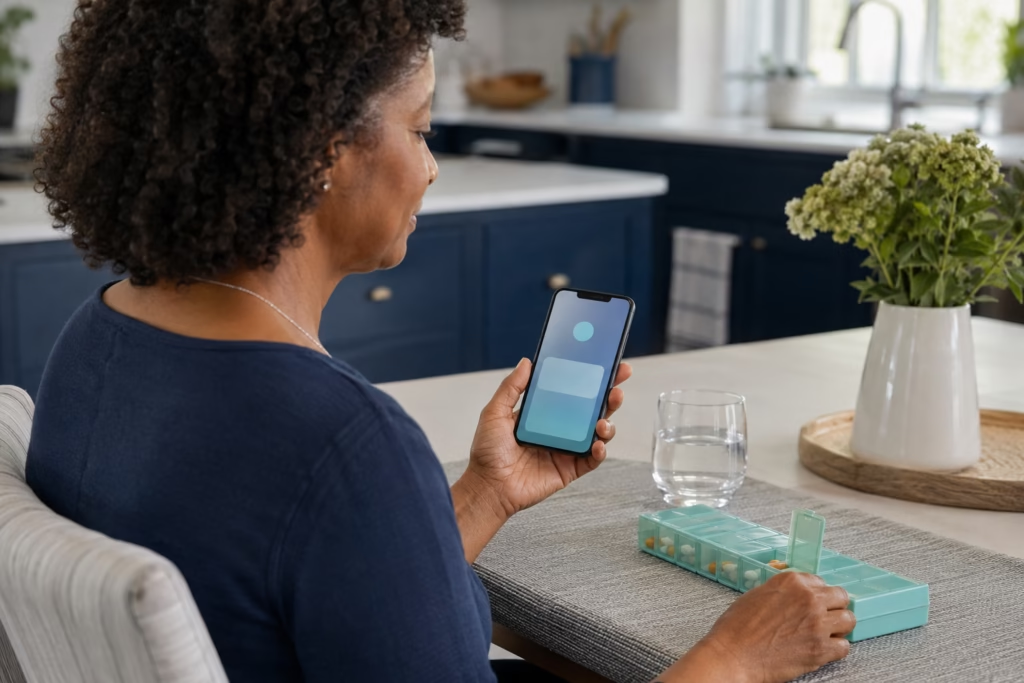
4. Use Refill Reminders and Medication Synchronization Responsibly
Refill reminders reduce the risk that a patient forgets to request a recurring medicine. Medication synchronization goes further by aligning multiple refill dates, where appropriate, so the patient can collect recurring prescriptions on a coordinated schedule.
These services can make care more convenient, support adherence and create predictable opportunities for the pharmacy team to identify problems. They may also reduce repeated urgent requests that disrupt workflow.
More than 90% of independent pharmacies reported offering some type of medication-adherence program in the 2023 NCPA Digest. View the NCPA Digest.
Follow-up must still respect privacy and customer choice. Pharmacies should confirm communication preferences, use appropriate safeguards, keep messages discreet and provide a clear way to change or stop reminders.
For US pharmacies, the Department of Health and Human Services explains when refill communications may fall outside the HIPAA definition of marketing and where restrictions apply. This guidance should be reviewed alongside applicable state law and professional advice. Read the HHS refill-reminder guidance.
5. Personalize Service Without Compromising Privacy
Independent pharmacies are well placed to provide personal service, but personalization must be respectful. Useful personalization can include remembering a customer’s preferred communication method, recording requested services, tailoring health education to stated needs and greeting repeat customers professionally.
It should never involve discussing a condition within hearing distance of other customers, using patient information for unrelated promotion or making someone feel watched. Staff should understand the difference between recognizing a person and exposing private information.
The objective is simple: make the service feel relevant and considerate while collecting and using only the information required for a legitimate purpose.
6. Resolve Service Failures Before Customers Quietly Disappear
A stock problem, missed delivery or long delay does not automatically end a customer relationship. The way the pharmacy responds can determine whether the person returns.
Use a simple service-recovery process:
- Listen without interrupting.
- Acknowledge the inconvenience without becoming defensive.
- Explain what can and cannot be corrected.
- Agree on the next step and realistic timing.
- Follow up after the problem is resolved.
- Record recurring causes so the team can prevent them.
The pharmacy should also distinguish between its own service failure and problems caused by an insurer, supplier or prescriber. Even when the pharmacy cannot control the cause, it can still communicate clearly and help the customer understand the available options.
7. Give Patients Valuable Reasons to Stay Connected
Loyalty strengthens when the pharmacy becomes more than a place to complete a transaction. Depending on licensing, staffing and local regulations, useful services may include medication reviews, vaccinations, health screenings, adherence packaging, prescription delivery, chronic-care support, caregiver education and community health events.
The pharmacy should introduce services based on need rather than overwhelming every customer with a list of offers. A caregiver collecting several medicines may value adherence packaging or synchronized refills. A busy professional may value delivery. A patient starting a new medicine may benefit from follow-up counselling.
Research examining community pharmacies as medicine suppliers, advice providers and community health promoters found that these roles were positively related to patient satisfaction and loyalty. Read the study on PubMed.
8. Introduce a Pharmacy Loyalty Program Carefully
A rewards program can encourage repeat retail purchases, but it cannot compensate for poor service, inconvenient processes or lost trust. It should support the retention strategy, not become the strategy.
Before launching a pharmacy customer loyalty program:
- Decide which products and transactions qualify.
- Keep registration, earning and redemption easy to understand.
- Protect the personal and purchasing data collected.
- Ensure rewards do not encourage unnecessary medicine use.
- Review federal, state, payer and professional rules before linking incentives to prescription activity.
- Train staff to explain the program accurately.
- Measure repeat behaviour, not enrollment alone.
A program may be particularly useful for appropriate over-the-counter, personal-care and wellness purchases. The value offered should be meaningful enough to matter without training customers to buy only when a discount is available.
9. Ask for Feedback and Measure Whether Customers Return
A pharmacy cannot improve retention using assumptions alone. Short, specific feedback questions can reveal why customers return, what frustrates them and which services they value.
Useful pharmacy customer-retention measures include:
- Repeat-purchase rate.
- Prescription-refill continuity.
- Medication-synchronization enrollment and retention.
- Repeat use of delivery or other services.
- Complaint volume and resolution time.
- Customer-satisfaction trends.
- Review themes and referral sources.
- Loyalty-program participation and redemption.
A basic customer retention rate can be calculated as follows:
| Retention rate = ((Customers at the end of the period – new customers acquired during the period) / customers at the start of the period) x 100 |
Pharmacy systems may count patients, households, prescriptions and retail transactions differently. Define what a retained customer means before comparing periods, and use the same definition consistently.
A 30-Day Pharmacy Customer-Retention Plan
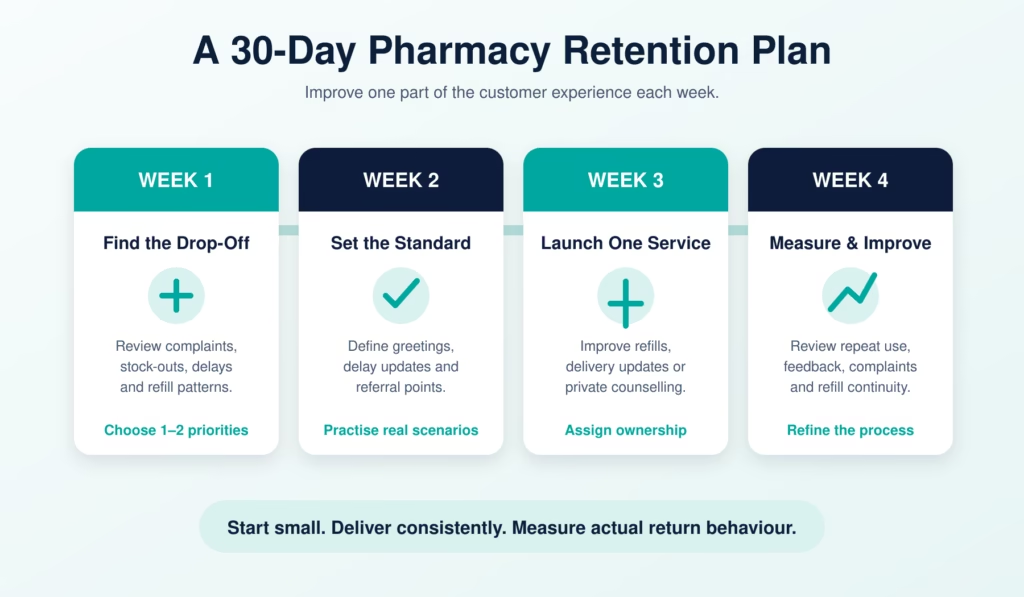
Improving retention does not require changing everything at once. A focused 30-day plan can identify the largest weakness, introduce one meaningful improvement and establish a measurement routine.
| Week | Focus | Priority actions |
| 1 | Find the drop-off points | Review complaints, wait times, stock communication, missed refills and common reasons customers contact the pharmacy. |
| 2 | Standardize the experience | Create a minimum first-visit service standard and train the team on listening, privacy, expectations and follow-up. |
| 3 | Remove one major friction | Introduce or improve one useful service such as refill reminders, medication synchronization, delivery or scheduled pickup. |
| 4 | Measure and improve | Request focused feedback, compare early indicators and correct processes the team cannot deliver consistently. |
Week 1: Find Where Customers Are Dropping Off
Review recent complaints, abandoned requests, common questions, stock-outs, delivery failures and refill patterns. Speak with frontline employees; they often know which problems recur but may not have a formal way to report them. Select one or two issues with a clear effect on the customer experience.
Week 2: Standardize the Customer Experience
Turn the findings into practical service standards. Define how customers should be acknowledged, how delays should be explained, when staff should involve the pharmacist and how the team should introduce appropriate follow-up services. Practise with realistic scenarios rather than relying only on written instructions.
Week 3: Implement One Meaningful Retention Service
Choose the improvement most closely connected to customer need. It might be a clearer refill-request process, medication synchronization for eligible patients, more reliable delivery updates or a private counselling procedure. Assign responsibility and ensure the team can deliver it consistently before promoting it widely.
Week 4: Measure and Improve
Ask customers one or two focused questions, review the first results and identify operational problems. Do not judge success only by how many people enroll in a service. Look for continued use, fewer complaints, improved refill continuity and evidence that the experience is becoming easier.
Pharmacy Customer-Retention Mistakes to Avoid
- Depending entirely on discounts to bring customers back.
- Treating a loyalty card as a complete retention strategy.
- Sending promotional or refill messages without appropriate privacy safeguards.
- Recommending unnecessary products to increase short-term sales.
- Collecting more customer data than the pharmacy can protect or use responsibly.
- Promising services or turnaround times the team cannot deliver consistently.
- Ignoring complaints, negative reviews and repeated service failures.
- Measuring program enrollment instead of actual repeat behaviour.
- Spending heavily on acquisition while existing patients quietly leave.
Frequently Asked Questions
How Can an Independent Pharmacy Improve Customer Retention?
An independent pharmacy can improve customer retention by delivering a consistent first-visit experience, training staff to communicate well, reducing inconvenience, offering useful follow-up services and measuring whether customers return. Retention improves when patients trust the team and find it easy to continue using the pharmacy.
What Makes Customers Loyal to a Pharmacy?
Pharmacy customer loyalty is usually built through trust, service quality, convenience, respectful communication and continuity of care. Rewards may support loyalty, but customers are unlikely to remain genuinely loyal if the pharmacy is unreliable, difficult to use or careless with their privacy.
Do Pharmacy Loyalty Programs Increase Customer Retention?
A well-designed loyalty program may encourage repeat retail purchases, but its effect depends on the overall customer experience. It should be easy to use, offer appropriate value and comply with applicable rules. It cannot repair consistently poor service or inconvenient pharmacy processes.
How Do Refill Reminders Support Pharmacy Retention?
Refill reminders help patients remember recurring medicines and create a convenient connection with the pharmacy. They may support adherence and reduce last-minute refill requests. Pharmacies should confirm communication preferences, apply appropriate privacy safeguards and ensure messages remain discreet.
What Is Medication Synchronization?
Medication synchronization is the coordination of eligible recurring prescription refill dates so that a patient can collect several medicines on a shared schedule. When implemented appropriately, it may improve convenience, support adherence and give the pharmacy team regular opportunities to identify medication-related concerns.
How Should a Pharmacy Measure Customer Retention?
A pharmacy can monitor repeat transactions, prescription-refill continuity, continued participation in medication synchronization, repeat use of services, customer feedback and complaint resolution. The pharmacy should define whether it is measuring individual patients, households, prescriptions or retail customers before comparing results.
Can Pharmacies Send Refill Reminders Under HIPAA?
HHS guidance explains that certain refill reminders and treatment communications are not considered marketing under HIPAA, but restrictions and safeguards still apply. Pharmacies should review the specific HHS guidance, applicable state requirements and their own compliance policies rather than assuming every message is permitted.
Loyalty Is Earned After the First Sale
Customer acquisition gets someone through the door. Pharmacy customer retention depends on what happens during the visit and after the transaction is complete.
Independent pharmacies have an advantage that large, highly standardized competitors often struggle to reproduce: the ability to combine professional care with personal knowledge of the communities they serve. That advantage only becomes loyalty when it is supported by reliable service, convenient processes, responsible follow-up and a team that treats every interaction as part of a longer relationship.
Start by reviewing the experience of the last ten first-time customers. Identify one unnecessary source of friction, correct it and give every new customer a clear, relevant reason to return.
About the Author
| Irene Wanyama is a healthcare and pharmacy SEO content writer with professional experience in pharmacy operations, customer service, sales and digital marketing. She creates clear, evidence-informed content for pharmacy, healthcare and healthtech businesses. |
Portfolio and enquiries: neksasdigital.com | WhatsApp Irene
Selected Sources
- Choi et al. Relational continuity of care in community pharmacy.
- Nunes et al. Patient reactions to community pharmacies’ roles.
- Gul. Service quality, outpatient satisfaction and loyalty in community pharmacies.
- National Community Pharmacists Association. 2023 NCPA Digest.
- Centers for Medicare & Medicaid Services. Patient Counseling – A Pharmacist’s Responsibility.
- US Department of Health and Human Services. HIPAA Privacy Rule and Refill Reminders.
