

If you’re still relying solely on yard signs, newspaper ads, and cold calling to sell homes, you’re leaving the vast majority of your potential clients on the table. According to the National Association of Realtors, 97% of homebuyers use the internet in their search process — and that number has only grown in recent years. Buyers aren’t just browsing casually, either. They’re researching neighborhoods, comparing listings, vetting agents, and forming opinions about who to trust long before they ever pick up the phone. If your digital presence isn’t strong, strategic, and visible, you’re essentially invisible to the modern homebuyer.
So, how to do digital marketing in real estate effectively? It’s not about posting a few listing photos on Facebook and hoping for the best. Digital marketing in real estate is a comprehensive, data-driven approach to attracting, engaging, and converting potential buyers and sellers through online channels. It encompasses everything from search engine optimization (SEO) and pay-per-click advertising (PPC) to social media marketing, email campaigns, content creation, video tours, and CRM automation. When done right, it positions you not just as an agent with listings, but as a trusted local expert who understands the market and delivers real value.
Traditional marketing methods — think print mailers, billboards, radio spots, and door-knocking — still have their place, but they no longer deliver the reach, targeting precision, or measurable return on investment that digital strategies offer. A billboard might be seen by thousands, but how many of those viewers are actually looking to buy or sell a home in your area? Digital marketing flips that equation. It allows you to target specific demographics, behaviors, and geographic areas with surgical precision. You can track every click, every lead, and every dollar spent. You can retarget someone who visited your website but didn’t fill out a form. You can nurture a cold lead into a warm prospect with automated email sequences. In short, digital marketing gives real estate professionals the tools to work smarter, not just harder.
In this guide, we’ll walk you through exactly how to do digital marketing in real estate from the ground up. You’ll learn how to build an SEO-optimized website that ranks on Google, master local SEO to dominate your market, leverage social media to build trust and generate leads, run profitable paid ad campaigns, create content that positions you as an authority, and implement CRM and email automation to convert leads into closings. Whether you’re a solo agent looking to grow your pipeline or a brokerage seeking to scale your brand, the strategies in this guide are designed to be actionable, affordable, and results-driven.
The real estate landscape has shifted. The agents and brokerages who adapt to digital-first marketing are the ones who will thrive. Let’s get started.
What Is Digital Marketing in Real Estate?
Before you can execute a winning strategy, you need to understand exactly what you’re working with. Digital marketing in real estate refers to the use of online platforms, tools, and technologies to promote properties, attract potential buyers and sellers, build brand awareness, and generate qualified leads. Unlike traditional marketing, which relies on physical touchpoints and broad-reach broadcasting, digital marketing operates in the spaces where people already spend hours every day — on Google, social media feeds, email inboxes, and mobile apps.
At its core, real estate online marketing is about meeting your audience where they are and guiding them through a journey from awareness to action. A prospective buyer might first discover you through a Google search for “homes for sale in [your city],” follow you on Instagram for neighborhood insights, subscribe to your email newsletter for market updates, and eventually book a consultation through your website. Each of these touchpoints is a digital marketing channel working together to build trust and move the prospect closer to a transaction.
The Key Channels of Digital Real Estate Marketing
A comprehensive digital real estate strategy spans multiple channels, each serving a distinct purpose in your funnel:
Website & SEO: Your website is your digital storefront. It’s where listings live, where leads convert, and where your authority is established. Search engine optimization (SEO) ensures your site appears when buyers and sellers search for relevant terms — from “luxury condos downtown” to “best real estate agent near me.”
Pay-Per-Click Advertising (PPC): Google Ads, Facebook Ads, and Instagram Ads allow you to place targeted advertisements in front of high-intent audiences. You only pay when someone clicks, making PPC a scalable way to generate immediate leads while your organic strategies gain traction.
Social Media Marketing: Platforms like Instagram, Facebook, LinkedIn, and TikTok are powerful tools for showcasing listings, sharing market expertise, and building personal connections. Social media humanizes your brand and keeps you top-of-mind in a relationship-driven industry.
Email Marketing: Once you’ve captured a lead, email automation and newsletters nurture that relationship over time. Drip campaigns can educate first-time buyers, re-engage past clients, and keep your pipeline full without manual effort.
Content Marketing: Blogs, market reports, video tours, neighborhood guides, and downloadable resources position you as a knowledgeable local expert. Valuable content attracts organic traffic, earns backlinks, and builds long-term trust.
CRM & Marketing Automation: Customer relationship management systems like Follow Up Boss, LionDesk, or HubSpot track every interaction, automate follow-ups, and ensure no lead falls through the cracks.
Digital vs. Traditional Real Estate Marketing
The difference between digital and traditional real estate marketing isn’t just the medium — it’s the mindset. Traditional methods like print advertising, direct mail, billboards, radio spots, and open houses rely on casting a wide net and hoping the right person sees it at the right time. They’re expensive, difficult to measure, and offer limited targeting capabilities. You might spend thousands on a magazine ad without ever knowing if it generated a single qualified lead.
Digital real estate strategies, by contrast, are inherently measurable and targetable. You can identify exactly who clicked your ad, how long they stayed on your site, which pages they visited, and whether they filled out a contact form. You can A/B test headlines, adjust budgets in real time, and retarget users who didn’t convert the first time. The data tells you what’s working, what’s not, and where to invest next.
That said, the most successful agents and brokerages don’t abandon traditional methods entirely — they integrate them. A direct mail piece can drive traffic to a landing page. An open house can be promoted via Instagram Stories and followed up with an automated email sequence. The key is using digital as the engine of your marketing machine, with traditional tactics playing a supporting role.
In the sections that follow, we’ll break down exactly how to implement each of these digital channels step by step, so you can build a cohesive system that attracts leads, nurtures relationships, and closes more deals.
Why Digital Marketing Is Essential for Real Estate Success
The real estate industry has undergone a fundamental transformation over the past decade, and the agents who recognize this shift are the ones building sustainable, scalable businesses. Digital marketing isn’t a trendy add-on or a nice-to-have anymore — it’s the backbone of modern real estate success. Here’s why embracing digital real estate strategies isn’t just smart; it’s essential if you want to remain competitive, profitable, and relevant in today’s market.
The Market Has Shifted to Online Property Searches
Let’s start with the undeniable truth: your clients are online, and they’re making decisions there before they ever contact you. The National Association of Realtors consistently reports that over 90% of homebuyers use online tools during their search process. But it’s not just about browsing Zillow or Realtor.com. Buyers are researching school districts on Google, exploring neighborhoods via Instagram geotags, watching virtual walkthroughs on YouTube, and reading agent reviews on Facebook before they even consider scheduling a showing.
Sellers are equally digital-first. Before choosing an agent, they’re searching “how to sell my house fast,” comparing local agents’ websites, and scrutinizing online presence and reviews. If you’re not showing up in these critical moments — with professional content, optimized listings, and a credible digital footprint — you’re not even entering the conversation. Your competitors are.
This shift isn’t temporary. Each year, more millennials and Gen Z buyers enter the market, and these demographics have never known a world without smartphones, social media, and instant Google answers. They expect seamless digital experiences, immediate responses, and transparent information. Meeting these expectations isn’t about being ahead of the curve anymore; it’s about not falling behind it.
Digital Marketing Is More Cost-Effective Than Traditional Advertising
Traditional real estate marketing — print ads in local magazines, radio spots, billboards, and direct mail campaigns — can drain your budget quickly with minimal accountability. A full-page magazine ad might cost $2,000 and reach thousands of readers, but how many are actively looking to buy or sell? How many even live in your service area? The targeting is blunt, the waste is significant, and the return is often impossible to calculate.
Digital marketing flips this model entirely. With platforms like Google Ads and Facebook Ads, you can set daily budgets as low as $10 and target audiences with remarkable precision — by location, age, income level, homeownership status, recent life events (like getting married or having a baby), and even online behaviors. A $500 digital campaign can generate more qualified leads than a $5,000 print campaign because every dollar is directed toward people who actually fit your ideal client profile.
Organic digital strategies compound this cost advantage. A well-optimized blog post or YouTube video can continue generating leads months or even years after you publish it, with no additional spend. Your website works 24/7. Your email sequences nurture leads while you sleep. The upfront investment in digital infrastructure pays dividends far longer than any one-off traditional advertisement.
Data-Driven Targeting and Measurable ROI
Perhaps the most powerful advantage of digital marketing is the data. Every click, impression, conversion, and bounce rate is trackable. You can see exactly which Facebook ad generated a lead, which blog post brought organic traffic, which email subject line got the highest open rate, and which landing page converted visitors into consultations.
This level of insight transforms how you allocate resources. Instead of guessing whether your marketing is working, you know. You can A/B test two versions of a Google ad and within days determine which headline drives more clicks. You can identify that Instagram Reels generate three times more engagement than static posts, and adjust your content strategy accordingly. You can calculate your exact cost per lead by channel and double down on what works while cutting what doesn’t.
For real estate professionals, this measurability is game-changing. Your commission income depends on a steady pipeline of qualified prospects. Digital marketing gives you the dashboard to monitor that pipeline in real time, optimize your funnel continuously, and scale your efforts with confidence. You’re no longer throwing money at vague “brand awareness” and hoping for the best. You’re engineering a predictable, repeatable lead generation system.
Building Long-Term Brand Authority
Real estate is a relationship business, but those relationships increasingly begin online. Your digital presence is often the first impression — and sometimes the only impression — potential clients have of you. A polished website, consistent social media content, valuable blog resources, and positive online reviews collectively build something that no single transaction can buy: authority.
When a seller searches “best real estate agent in [your city]” and finds your comprehensive neighborhood guide, your market analysis video, and your fifty five-star Google reviews, you don’t have to sell yourself hard. Your digital footprint has already done the selling. You’ve demonstrated expertise, transparency, and reliability before the first phone call.
This authority compounds over time. Every piece of content you publish, every testimonial you collect, every local search result you claim strengthens your position in the market. You become the go-to resource not just for transactions, but for information. And in an industry where trust is currency, that positioning is invaluable.
Traditional marketing can make you known. Digital marketing makes you trusted, findable, and memorable in the spaces where modern consumers actually live. The agents who invest in building this digital authority today are the ones who will dominate their markets tomorrow.
In the next section, we’ll dive into the practical framework for how to do digital marketing in real estate — starting with the foundational step of building a high-converting, SEO-optimized website.
Here is the full draft copy for the “How to Build a Real Estate Digital Marketing Strategy” section with all eight steps:
How to Build a Real Estate Digital Marketing Strategy
Knowing why digital marketing matters is only half the battle. The real work — and the real results — come from building a cohesive, executable strategy that ties every channel together into a lead-generating machine. Below is a step-by-step framework for how to do digital marketing in real estate, whether you’re starting from scratch or refining an existing approach.
Step 1 — Create a Professional, SEO-Optimized Website
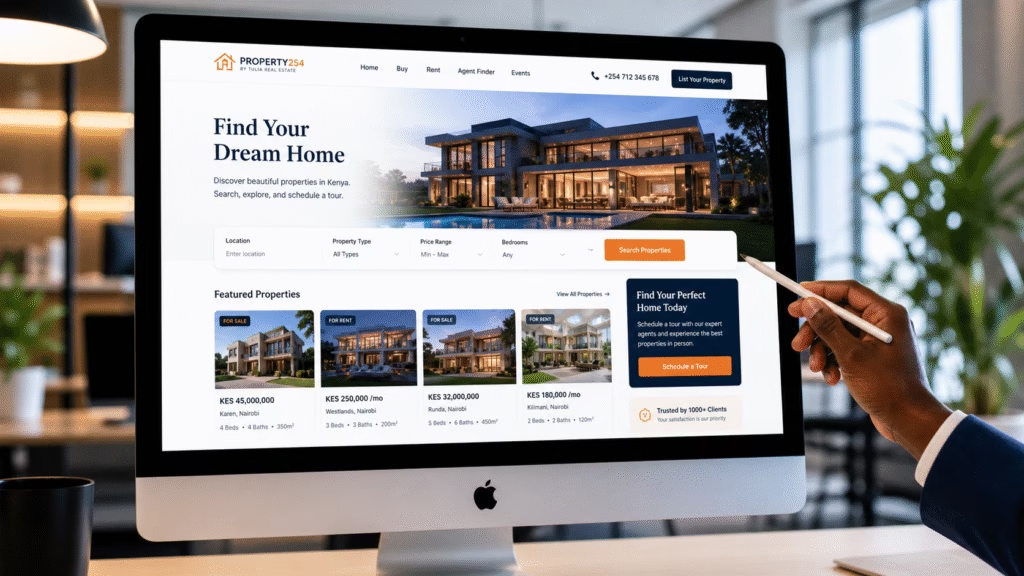
Your website is the command center of your entire digital marketing operation. Every social post, email, and ad ultimately drives traffic back to this destination. If your site is slow, clunky, or confusing, you’re hemorrhaging leads before they even have a chance to know you.
Mobile-First Design: Over 60% of real estate website traffic comes from mobile devices. Your site must look and function flawlessly on smartphones and tablets. This means responsive layouts, thumb-friendly navigation, click-to-call buttons, and forms that are easy to complete on a small screen. If a buyer can’t swipe through your listings comfortably on their lunch break, they’ll bounce to an agent whose site works better.
Fast Loading Speed (Core Web Vitals): Google uses page speed as a direct ranking factor, and users expect sites to load in under three seconds. Compress your images, minimize unnecessary scripts, leverage browser caching, and use a reliable hosting provider. Slow load times don’t just hurt your SEO — they kill conversions. A one-second delay can reduce page views by 11% and customer satisfaction by 16%.
IDX Integration for Property Listings: An Internet Data Exchange (IDX) feed pulls MLS listings directly onto your website, allowing visitors to search properties without leaving your branded environment. This keeps them engaged longer, captures their search behavior, and positions you as the source of inventory — not just a middleman sending them to third-party portals.
Clear CTAs and Lead Capture Forms: Every page should have a clear, compelling call-to-action. Whether it’s “Schedule a Free Consultation,” “Get a Free Home Valuation,” or “Download Our Buyer’s Guide,” your CTAs must stand out visually and communicate immediate value. Place lead capture forms strategically — above the fold on key pages, at the end of blog posts, and as exit-intent popups. Ask for minimal information initially (name, email, phone) to reduce friction.
Real Estate Website SEO: Beyond the technical foundations, your site needs on-page SEO optimization. This means keyword-rich title tags and meta descriptions, descriptive alt text for images, schema markup for listings and reviews, internal linking between related content, and a logical URL structure. Your site should be crawlable, indexable, and structured so both search engines and humans understand what you offer and why you’re relevant.
Step 2 — Master Local SEO
Real estate is inherently local. Someone searching for a home isn’t looking nationally — they’re looking in specific neighborhoods, school districts, and zip codes. Local SEO ensures you dominate those geographic searches.
Google Business Profile Optimization: Claim and fully optimize your Google Business Profile (formerly Google My Business). Use your exact business name, select the correct categories (Real Estate Agent, Real Estate Agency), write a keyword-rich description, upload high-quality photos of yourself and your team, and post regular updates. Enable messaging and respond to all inquiries promptly. Your GBP is often the first thing prospects see when they search your name or “real estate agent near me.”
Local Keyword Targeting: Build pages and content around hyperlocal terms: “homes for sale in [city],” “[neighborhood] real estate market trends,” “best schools in [school district],” and “condos for sale near [landmark].” These long-tail keywords have lower competition and higher conversion intent than broad terms like “real estate.” Create dedicated neighborhood landing pages with unique content, market data, and local insights — not just listing feeds.
NAP Consistency Across Directories: Your Name, Address, and Phone number must be identical everywhere they appear online — your website, Google Business Profile, Yelp, Zillow, Realtor.com, local chamber of commerce sites, and any other directory. Inconsistencies confuse search engines and dilute your local ranking power. Use a tool like Moz Local or BrightLocal to audit and fix discrepancies.
Client Reviews and Reputation Management: Reviews are a top-three local ranking factor and a massive trust signal for prospects. Systematically request reviews from satisfied clients immediately after closing. Make it easy with direct links to your Google review page. Respond to every review — positive and negative — professionally and promptly. A steady stream of recent, authentic reviews signals to Google and potential clients that you’re active, reputable, and delivering results.
Step 3 — Leverage Content Marketing
Content marketing is the engine of organic growth. It attracts visitors, builds authority, earns backlinks, and nurtures leads through long sales cycles. In real estate, where decisions take months and trust is paramount, content isn’t optional — it’s your competitive advantage.
Blogging About Neighborhoods, Market Trends, and Buying/Selling Tips: Your blog should answer the questions your clients are already asking Google. “Is now a good time to buy in [city]?” “What are closing costs?” “Best neighborhoods for young families in [area].” Each post is an opportunity to rank for a specific search query, demonstrate expertise, and capture leads through embedded CTAs. Aim for depth over frequency — a single 2,000-word comprehensive guide will outperform ten thin 300-word posts.
Video Tours and Virtual Walkthroughs: Written content builds authority, but video builds connection. Walk through listings with a gimbal-stabilized camera, narrating features and neighborhood highlights. Embed these videos on your site and YouTube channel. Video keeps visitors on your pages longer (a positive SEO signal) and helps distant or busy buyers pre-qualify properties before scheduling in-person showings.
Market Reports and Downloadable Guides: Create gated resources like “Q2 2026 [City] Market Report,” “First-Time Buyer’s Complete Guide,” or “Seller’s Pre-Listing Checklist.” These require an email address to download, converting anonymous visitors into named leads. They also position you as a data-driven professional who understands market dynamics.
Content Calendar Planning: Sporadic posting kills momentum. Develop a monthly content calendar that balances evergreen topics (always relevant) with timely pieces (market updates, new development announcements, interest rate changes). Plan your production workflow — who writes, who edits, who publishes, who promotes — so execution is systematic, not chaotic.
Real Estate Content Marketing: The key to success is consistency and quality. Search engines reward sites that publish helpful, original content regularly. Your audience rewards you with attention, trust, and eventually, business. Treat content as a long-term asset, not a quick fix.
Step 4 — Use Social Media Marketing
Social media is where relationships are built at scale. It’s where you humanize your brand, showcase personality, and stay visible between transactions. But effective social media marketing for real estate requires strategy, not just posting listing photos and hoping for likes.
Platform Selection: Choose platforms based on your target audience and content strengths.
- Instagram: Visual-first, ideal for property photos, Reels, Stories, and neighborhood lifestyle content. Best for reaching millennials and Gen Z buyers.
- Facebook: Broad demographic reach, excellent for community groups, event promotion, targeted ads, and retargeting. Strong for both buyers and sellers.
- LinkedIn: Professional network, best for commercial real estate, investor relations, B2B partnerships, and establishing thought leadership.
- TikTok: Explosive growth, short-form video, massive organic reach potential. Ideal for agents comfortable on camera who can create entertaining, educational content quickly.
You don’t need to be everywhere. Master one or two platforms where your ideal clients spend time before expanding.
Posting Frequency and Content Types: Aim for consistency over volume. On Instagram, 4–7 posts per week (mix of feed posts, Reels, and Stories) is strong. On Facebook, 3–5 posts weekly. Vary your content: listings (20%), market education (30%), behind-the-scenes/personal (25%), client testimonials and success stories (15%), community highlights (10%). The 80/20 rule applies — 80% value and engagement, 20% direct promotion.
Paid Social Ads for Listing Promotion: Organic reach has declined across platforms, making paid amplification essential. Boost your best-performing posts. Run carousel ads showcasing multiple listing photos. Use Facebook Lead Ads to capture contact information without users leaving the platform. Target by geography, demographics, and behaviors (recently engaged, new parents, likely to move).
Community Engagement and DM Strategies: Social media is social. Respond to every comment. Engage with local business accounts, community pages, and potential clients’ content. Use Instagram DMs to follow up with people who engage with your Stories. Join local Facebook groups and contribute value — don’t just spam listings. The agents who win on social are the ones who show up as humans first, marketers second.
Social Media Marketing for Real Estate: Success isn’t measured by follower count. It’s measured by conversations started, relationships built, and leads generated. Focus on engagement rate, direct message inquiries, and click-throughs to your website.
Step 5 — Run Targeted PPC and Google Ads
While SEO and content build long-term organic traffic, pay-per-click advertising delivers immediate visibility and leads. For agents who need business now — not six months from now — PPC is a critical component of digital real estate marketing.
Google Ads for High-Intent Keywords: Google captures people actively searching for solutions. Bid on high-intent keywords like “real estate agent [city],” “homes for sale in [neighborhood],” or “sell my house fast [city].” These users are further down the funnel and more likely to convert. Use ad extensions (sitelinks, callouts, location, call buttons) to maximize your ad real estate and click-through rate. Direct traffic to dedicated landing pages matching the ad’s promise — never dump PPC traffic on your homepage.
Facebook/Instagram Retargeting Campaigns: Most website visitors won’t convert on their first visit. Retargeting pixels allow you to show ads to people who previously visited your site, viewed specific listings, or abandoned a lead form. These warm audiences convert at significantly higher rates than cold traffic. Create custom audiences and lookalike audiences to scale efficiently.
Budget Allocation Tips: Start with a test budget — $500–$1,000 monthly — and allocate based on performance. If Google Ads generates leads at $25 each and Facebook at $75, shift budget accordingly. Reserve 20% of your budget for testing new audiences, creatives, and keywords. Never set campaigns and forget them; optimize weekly based on data.
Tracking Conversions and Cost Per Lead: Install conversion tracking on your website (Google Analytics 4, Google Tag Manager, Facebook Pixel). Define what counts as a conversion — form submission, phone call, chat initiation, or booked appointment. Calculate your cost per lead and cost per acquisition by channel. Know your numbers. If your average commission is $10,000 and you close 1 in 10 leads, you can afford to spend up to $1,000 per lead profitably.
Real Estate PPC Advertising: When managed strategically, PPC isn’t an expense — it’s an investment with measurable returns. The agents who treat it as a data-driven discipline, not a set-it-and-forget-it gamble, consistently outperform the market.
Step 6 — Implement Email Marketing & CRM Automation
Leads don’t convert immediately. The average real estate transaction involves months of research, consideration, and relationship-building. Email marketing and CRM automation ensure you stay connected, provide value, and capture opportunities when timing aligns.
Drip Campaigns for Buyers and Sellers: Create automated email sequences triggered by lead behavior. A buyer who downloads your “First-Time Buyer’s Guide” enters a 12-email nurture sequence covering financing pre-approval, neighborhood selection, offer strategies, inspection tips, and closing processes. A seller who requests a home valuation receives a series on staging, pricing strategy, marketing plans, and market timing. Each email should educate first, sell second.
Newsletter Content Ideas: Your monthly newsletter isn’t a sales pitch — it’s a relationship touchpoint. Include: local market snapshot (median price, days on market, inventory levels), featured listings, recently sold properties (social proof), community events, local business spotlights, and a personal note from you. Make it skimmable, visually appealing, and mobile-friendly.
Segmentation by Lead Type and Behavior: Not all leads are equal. Segment your list by: buyer vs. seller, price range, neighborhood interest, timeline (ready now vs. 6–12 months out), and engagement level. A lead who opened your last five emails and clicked a listing link is hot — trigger an alert for immediate personal follow-up. A cold lead who hasn’t engaged in 90 days gets a re-engagement campaign or is suppressed to protect deliverability.
CRM Tools: Your Customer Relationship Management system is the brain of your operation. Popular real estate CRMs include:
- Follow Up Boss: Built specifically for agents, excellent lead routing and action plans.
- LionDesk: Affordable, feature-rich with video texting and AI lead engagement.
- HubSpot: Powerful free tier, scalable for growing teams, robust marketing automation.
- kvCORE: All-in-one platform with lead generation, CRM, and website tools.
Choose based on your team size, budget, and technical comfort. The best CRM is the one you’ll actually use daily.
Step 7 — Utilize Video & Virtual Tours
Video is no longer a luxury in real estate marketing — it’s an expectation. It builds emotional connection, conveys scale and flow better than photos, and significantly increases engagement across all platforms.
Property Video Walkthroughs: For every significant listing, produce a professional walkthrough video. Use a gimbal or hire a videographer. Narrate the tour, highlighting unique features, recent upgrades, and neighborhood context. Keep videos between 2–4 minutes for optimal retention. Embed on your listing page, share on social media, and upload to YouTube with SEO-optimized titles and descriptions.
Drone Footage for Luxury Listings: Aerial video transforms how buyers perceive properties, especially luxury homes, large lots, waterfront properties, and developments. Drone footage showcases surrounding landscape, proximity to amenities, and property scale impossible to capture from the ground. Ensure you or your vendor are FAA Part 107 certified for commercial drone operation.
Live Virtual Open Houses: Use Facebook Live, Instagram Live, or Zoom to host real-time virtual open houses. Promote in advance, interact with viewers through comments, and save the recording for future use. This format expanded dramatically during recent years and remains popular for out-of-town buyers, busy professionals, and cautious shoppers who want to pre-screen properties.
YouTube SEO for Long-Term Visibility: YouTube is the second-largest search engine globally. Optimize every video: keyword-rich titles (“3 Bedroom Home Tour in [Neighborhood]”), detailed descriptions with timestamps and links, relevant tags, custom thumbnails, and playlists organized by neighborhood or property type. Transcribe videos for accessibility and additional indexable text. Well-optimized real estate videos can rank on both YouTube and Google search results for years.
Real Estate Video Marketing: The agents who commit to consistent, quality video content build unmatched familiarity and trust with their audience. Video allows prospects to “meet” you before meeting you, lowering barriers and accelerating the relationship timeline.
Step 8 — Invest in Paid Lead Generation Platforms
Third-party lead generation platforms like Zillow Premier Agent, Realtor.com, and Homes.com offer access to active buyers and sellers who are already searching for properties. While controversial among some agents, these platforms can supplement your organic and paid efforts when approached strategically.
Zillow Premier Agent: The largest real estate portal in the U.S. Premier Agent places you as the contact agent on listings in your zip codes. Leads are shared (often with multiple agents), so speed to lead is critical — contact within 5 minutes or less. The platform provides CRM tools and performance analytics.
Realtor.com: Similar model with generally lower cost per lead than Zillow in many markets. Offers advertising options for both buyers and sellers, including seller lead products that connect you with homeowners considering listing.
Pros and Cons of Third-Party Leads: The primary advantage is volume and immediacy — you get leads without building the funnel yourself. The disadvantages are cost (can exceed $500–$1,000+ monthly per zip code), competition (shared leads), lower conversion rates than organic leads, and dependency on platforms you don’t control. These leads should complement, not replace, your own lead generation systems.
How to Nurture Purchased Leads Effectively: Speed is everything. Use auto-responders and immediate phone follow-up. Qualify quickly — are they pre-approved? What’s their timeline? Have they spoken to other agents? Add qualified leads to your CRM nurture sequences. For unresponsive leads, continue automated email and text follow-up for 6–12 months. Many “bad” leads are simply early-stage shoppers who will convert later with consistent, valuable touchpoints.
Treat purchased leads as the top of your funnel, not the bottom. The conversion happens through your systems, not the platform itself.
In the next section, we’ll explore the specific tools and software that power these strategies, helping you choose the right tech stack for your budget and goals.
Real Estate Digital Marketing Tools & Software
Executing a comprehensive digital marketing strategy requires more than good intentions — it requires the right technology stack. The tools you choose will determine how efficiently you can build, manage, measure, and scale your efforts. Below is a breakdown of the essential categories and top platforms real estate professionals rely on to turn digital marketing from a time-consuming side project into a systematic, revenue-driving operation.
Website Builders: WordPress, Squarespace, Placester
Your website is the foundation of everything else. The builder you select impacts your design flexibility, SEO capabilities, loading speed, and integration options.
WordPress: The world’s most popular content management system powers over 40% of all websites — and for good reason. WordPress offers unlimited customization through thousands of themes and plugins. For real estate, plugins like WP Listings, Realtyna, or custom IDX integrations give you full control over how listings display and how leads capture. The learning curve is steeper than alternatives, and you’ll need reliable hosting (SiteGround, WP Engine, or Kinsta are solid choices), but the long-term scalability and SEO power are unmatched. If you plan to publish extensive content, optimize aggressively for search, and build a site that grows with your business, WordPress is the professional standard.
Squarespace: Known for stunning, designer-quality templates and an intuitive drag-and-drop interface. Squarespace is ideal for agents who prioritize aesthetics and ease of use over deep customization. Built-in features like blogging, galleries, and basic SEO tools work well for smaller operations. However, IDX integration is less seamless than WordPress, and advanced marketing automation or custom functionality requires workarounds. Best for solo agents or small teams who want a beautiful site live quickly without technical headaches.
Placester: Built exclusively for real estate professionals. Placester combines website building, IDX integration, lead capture, and CRM tools in one platform. Templates are industry-specific, mobile-responsive, and optimized for conversions out of the box. The trade-off is less design flexibility compared to WordPress and a higher monthly cost. For agents who want an all-in-one solution without managing multiple vendors, Placester removes friction — though power users may eventually outgrow its constraints.
Choosing Your Platform: Consider your technical skill level, budget, growth plans, and how much control you want. Start simple if needed, but ensure your chosen platform can scale as your content library, team size, and lead volume expand.
SEO Tools: Ahrefs, SEMrush, Google Search Console
You can’t optimize what you can’t measure. SEO tools reveal what your audience searches for, how your site performs, and where your competitors outrank you.
Ahrefs: A premium SEO suite beloved for its backlink analysis, keyword research, and content gap identification. Use Ahrefs to discover which keywords drive traffic to competing agents’ sites, find link-building opportunities, and track your ranking progress over time. The Site Audit feature crawls your website for technical SEO issues — broken links, slow pages, missing meta tags — and prioritizes fixes by impact. For agents serious about organic growth, Ahrefs is an investment that pays for itself through improved visibility.
SEMrush: An all-in-one marketing toolkit covering SEO, PPC, content marketing, and competitive research. SEMrush excels at keyword difficulty scoring, local SEO tracking, and PPC campaign planning. Its Position Tracking tool monitors your rankings for target keywords daily, alerting you to gains and losses. The Content Marketing Platform helps plan, write, and optimize blog posts based on real search data. If you run both organic and paid campaigns, SEMrush provides unified insights that prevent siloed decision-making.
Google Search Console: A free, essential tool from Google that shows how the search engine views your site. Search Console reveals which queries bring users to your pages, your average position for each keyword, click-through rates, and indexing issues. It alerts you to mobile usability problems, Core Web Vitals scores, and security concerns. No real estate website should operate without Search Console installed and monitored weekly. It’s your direct line of communication with Google’s indexing system.
Using These Tools Together: Start with Google Search Console (free) to monitor technical health and baseline performance. Add Ahrefs or SEMrush (paid, $99–$199/month) for competitive intelligence, keyword research, and strategic planning. Check your dashboards weekly, set up automated reports for stakeholders, and let data — not guesswork — guide your content and optimization priorities.
Social Schedulers: Hootsuite, Buffer, Later
Consistency is the currency of social media, but posting manually across multiple platforms daily is unsustainable. Scheduling tools let you batch-create content, maintain posting cadence, and reclaim hours for client-facing work.
Hootsuite: One of the oldest and most robust social media management platforms. Hootsuite supports scheduling across 35+ social networks, including Instagram, Facebook, LinkedIn, Twitter, TikTok, and YouTube. Its dashboard allows you to monitor multiple streams simultaneously — mentions, messages, comments, and trending hashtags — and respond without switching apps. Advanced analytics track engagement, audience growth, and best-performing content. For teams, Hootsuite offers collaboration features, approval workflows, and role-based permissions. Best for brokerages or agents managing multiple accounts who need enterprise-level organization.
Buffer: Known for simplicity and clean design. Buffer’s strength is its streamlined scheduling experience — draft posts, drag them into a visual calendar, and let Buffer publish automatically. The browser extension makes sharing articles and listing pages instant. Analytics are straightforward, showing engagement metrics and optimal posting times. Buffer’s free plan covers basic needs for up to three social accounts, making it ideal for solo agents testing the waters. Paid plans unlock team features and more advanced reporting.
Later: Originally built for Instagram, Later has expanded to Facebook, Twitter, Pinterest, TikTok, and LinkedIn. Its visual content calendar is drag-and-drop intuitive, perfect for planning aesthetically cohesive Instagram grids. Later excels at hashtag suggestions, user-generated content curation, and link-in-bio tools (like Linkin.bio) that turn your Instagram profile into a mini-website. For visually oriented agents who prioritize Instagram and want planning tools designed around image-first workflows, Later is a natural fit.
Scheduling Strategy: Dedicate one morning per week to batch-scheduling your content. Mix evergreen posts with timely content left for manual posting (market updates, new listings, breaking news). Review analytics monthly to identify high-performing content types and optimal posting windows. Automation should free your time, not make your feed robotic — leave room for real-time engagement and spontaneous Stories.
CRMs: Follow Up Boss, LionDesk, kvCORE
Your Customer Relationship Management system is where leads live, breathe, and either convert or go cold. A great CRM doesn’t just store contacts — it automates follow-up, tracks interactions, and ensures no opportunity slips through cracks.
Follow Up Boss: Built by real estate professionals for real estate professionals. Follow Up Boss specializes in lead routing, action plans, and speed-to-lead automation. When a lead comes in — from Zillow, your website, Facebook, or any source — Follow Up Boss distributes it instantly based on your rules and triggers immediate follow-up tasks. The platform integrates with 200+ lead sources and tools, including major portals, dialers, and transaction management systems. Reporting dashboards show lead conversion rates, agent activity, and pipeline health. For teams and brokerages prioritizing lead response time and accountability, Follow Up Boss is the industry benchmark.
LionDesk: A feature-rich, budget-friendly CRM that punches above its weight. LionDesk includes video texting (send personalized video messages directly to leads’ phones), AI-powered lead engagement (the AI assistant “Lion” converses with leads via text to qualify them), bulk email and text campaigns, and task automation. The interface is modern and mobile-friendly, making it easy to manage relationships on the go. LionDesk’s affordability (plans start lower than many competitors) makes it accessible for individual agents who need robust functionality without enterprise pricing.
kvCORE: An all-in-one platform combining CRM, lead generation, website management, and marketing automation. kvCORE’s Smart CRM uses behavioral triggers to automatically nurture leads — if someone views a listing three times, the system sends a personalized follow-up. The platform includes built-in landing pages, email templates, social media content libraries, and predictive analytics to identify which leads are most likely to convert soon. kvCORE is powerful but complex, with a steeper learning curve. Best for tech-savvy agents or teams ready to centralize their entire marketing and sales operation in one ecosystem.
CRM Selection Criteria: Evaluate based on lead source integration (does it connect to your website, portals, and ads?), automation capabilities, mobile accessibility, reporting depth, team collaboration features, and cost. The best CRM is the one your team will use consistently — a neglected CRM is just an expensive database.
Analytics: Google Analytics 4, Google Tag Manager
Marketing without measurement is gambling. Analytics tools transform your digital efforts from intuition-based to evidence-based, showing you exactly what works, what doesn’t, and where to invest next.
Google Analytics 4 (GA4): The current standard for website analytics, replacing the previous Universal Analytics. GA4 tracks user behavior across your site — page views, session duration, bounce rates, traffic sources, conversion events, and user journeys. For real estate, set up custom events to track meaningful actions: contact form submissions, phone number clicks, PDF downloads, virtual tour plays, and chat initiations. GA4’s audience reports reveal demographic and interest data about your visitors, helping you refine ad targeting. The platform uses machine learning to predict churn probability and revenue potential, offering insights impossible to surface manually. Install GA4 immediately if you haven’t migrated, and configure conversion goals within your first week.
Google Tag Manager (GTM): A tag management system that simplifies how you deploy tracking codes on your website. Without GTM, adding a Facebook Pixel, Google Ads conversion tag, heatmap script, or chat widget requires editing website code directly — technical, error-prone, and dependent on developers. GTM provides a user-friendly interface to add, update, and manage all tracking tags through containers and triggers. Want to fire a conversion event when someone submits your “Schedule a Showing” form? GTM handles it without touching your site’s backend. For agents who run multiple ad platforms, use various marketing tools, and want agility in their tracking setup, GTM is essential.
Building Your Analytics Practice: Start with GA4 for baseline website behavior. Add GTM to manage all marketing tags cleanly. Connect your ad platforms (Google Ads, Facebook Ads Manager) to import conversion data and enable algorithmic optimization. Review your analytics weekly — not just vanity metrics like total traffic, but conversion rates, cost per acquisition by channel, and user flow patterns. Create monthly dashboards for stakeholders. The agents who master analytics make better budget decisions, identify opportunities faster, and scale with confidence rather than hope.
Integrating Your Tech Stack
The true power of these tools emerges when they work together. Your website captures leads and feeds them to your CRM. Your CRM triggers automated email sequences. Your email clicks are tracked in GA4. Your social scheduler promotes blog content that ranks via SEO tools. Your PPC ads retarget visitors who didn’t convert initially. This interconnected system — website, SEO, social, CRM, email, analytics — is what transforms isolated tactics into a unified digital marketing machine.
Invest in tools gradually. Master one platform before adding complexity. Prioritize integration capabilities when evaluating new software. And remember: tools amplify strategy, they don’t replace it. The best CRM in the world won’t save a broken follow-up process. The most expensive SEO suite won’t rank thin content. Choose your stack wisely, implement it thoroughly, and let your strategy and execution determine your success.
In the next section, we’ll tackle a practical question every agent asks: how much should you actually spend on all of this?
Real Estate Digital Marketing Budget Guide
One of the most common questions agents and brokerages ask is: “How much should I actually spend on digital marketing?” The honest answer is — it depends on your goals, your market, your current revenue, and how aggressively you want to grow. But vague advice doesn’t help you make decisions. This section provides concrete frameworks, sample budgets, and ROI expectations so you can allocate your marketing dollars strategically rather than anxiously.
Percentage of Commission Income to Allocate
Industry benchmarks suggest real estate professionals should invest 10% to 20% of their gross commission income (GCI) into marketing. Top-producing agents and teams often push toward 25% or higher during growth phases, knowing that every dollar spent efficiently returns multiples in closed business.
Here’s how to think about this percentage in practice:
- New agents (under $50,000 GCI): Allocate 15–20%. You need to build visibility fast, and your income base is small enough that aggressive investment won’t break you. A $40,000 earner spending $6,000–$8,000 annually on digital marketing is reasonable if it accelerates your first few deals.
- Established solo agents ($50,000–$150,000 GCI): Allocate 12–18%. You have some referral flow but need consistent lead generation to smooth out the feast-or-famine cycle. At $100,000 GCI, that’s $12,000–$18,000 yearly, or $1,000–$1,500 monthly.
- Teams and top producers ($150,000+ GCI): Allocate 10–15% for maintenance, 15–25% for expansion. At $300,000 GCI, a $45,000–$75,000 marketing budget fuels systems, hires, and market domination strategies.
These percentages include all marketing — digital and traditional. If you’re shifting digital-first, expect 70–80% of your total marketing budget to flow into online channels within your first two years.
Sample Monthly Budgets
To make this tangible, here are three realistic monthly budget scenarios with specific allocations:
Budget A: The Solo Agent Starter — $500/Month
Total Annual Investment: $6,000
| Channel | Monthly Allocation | Purpose |
|---|---|---|
| Website & Hosting | $50 | Premium hosting, domain, basic maintenance |
| Local SEO & GBP | $0 (sweat equity) | Self-managed optimization, review requests |
| Content Creation | $150 | 2 blog posts/month (self-written or modest freelance) |
| Social Media Ads | $200 | Facebook/Instagram lead generation campaigns |
| Email Marketing | $30 | CRM/email platform subscription |
| CRM/Tools | $50 | Basic CRM or marketing suite |
| Learning/Training | $20 | Courses, certifications, strategy resources |
Strategy Focus: Build foundational assets (website, Google Business Profile, content library) while driving immediate leads through modest social ad spend. Heavy reliance on time investment over cash. Expect 3–8 qualified leads monthly with consistent execution.
Budget B: The Growing Professional — $1,500/Month
Total Annual Investment: $18,000
| Channel | Monthly Allocation | Purpose |
|---|---|---|
| Website & SEO | $200 | Technical improvements, local SEO service, content |
| PPC/Google Ads | $400 | High-intent keyword campaigns |
| Social Media (Organic + Paid) | $350 | Content creation, scheduling tools, boosted posts, Stories/Reels |
| Content Marketing | $250 | 4 blog posts, 2 videos, market reports |
| Email & CRM Automation | $150 | Advanced CRM, drip sequences, segmentation |
| Video Production | $100 | Editing tools, stock footage, occasional freelancer |
| Analytics & Tools | $50 | SEO software, heatmaps, tag management |
Strategy Focus: Diversify lead sources across organic SEO, paid search, and social while building automation systems. Expect 10–25 qualified leads monthly with proper funnel optimization.
Budget C: The Market Dominator — $5,000+/Month
Total Annual Investment: $60,000+
| Channel | Monthly Allocation | Purpose |
|---|---|---|
| Website & Advanced SEO | $500 | Full SEO retainer, technical audits, link building |
| PPC/Google Ads | $1,500 | Aggressive keyword coverage, remarketing, display |
| Social Media | $800 | Full-time content creation, influencer partnerships, paid amplification |
| Video & Creative | $600 | Professional videography, drone footage, virtual production |
| Content & PR | $400 | Guest posting, local media placement, premium market reports |
| CRM & Automation | $300 | Enterprise CRM, custom workflows, AI lead scoring |
| Paid Lead Platforms | $500 | Zillow Premier Agent, Realtor.com, niche portals |
| Analytics & CRO | $400 | Conversion rate optimization, A/B testing, advanced analytics |
Strategy Focus: Omnichannel presence with professional execution across every touchpoint. Build brand equity while capturing leads at every funnel stage. Expect 40–100+ qualified leads monthly depending on market size and competition.
Where to Spend First If Budget Is Limited
If you’re starting with $500 or less monthly, prioritize ruthlessly. Here’s the sequence:
Month 1–2: Foundation
- Professional website with IDX integration ($50–$100 hosting + template)
- Google Business Profile optimization (free)
- Basic CRM setup ($30–$50)
Month 3–4: Traffic
- Launch Facebook/Instagram lead ads ($200–$300)
- Begin consistent social posting (free with time investment)
- Start collecting reviews systematically (free)
Month 5–6: Assets
- Publish first 4–6 blog posts targeting local keywords ($150–$200 freelance or self-written)
- Create one downloadable lead magnet (free guide, market report)
- Implement email capture and basic drip sequence
Month 7+: Scale What Works
- Analyze which channel generated your best leads
- Reallocate budget toward winners
- Add Google Ads only after Facebook/social is profitable
- Invest in video once organic content proves engagement
The Golden Rule: Never spend on advertising before your conversion infrastructure is ready. Driving traffic to a broken website, slow site, or missing lead forms is burning money. Fix the funnel first, then pour fuel on the fire.
ROI Expectations by Channel
Understanding realistic returns prevents both pessimism and dangerous optimism. Here are benchmark ROI ranges for real estate digital marketing channels:
| Channel | Typical Cost Per Lead | Conversion Rate (Lead to Client) | Cost Per Acquisition | ROI Potential |
|---|---|---|---|---|
| Organic SEO/Content | $0–$50 (sweat equity + tools) | 2–5% | $1,000–$2,500 | Highest long-term ROI — compounding returns over 12–24 months |
| Google Ads (PPC) | $25–$100 | 3–8% | $800–$3,000 | High immediate ROI — scales with budget, stops when spending stops |
| Facebook/Instagram Ads | $15–$75 | 2–6% | $1,000–$4,000 | Moderate to high — highly dependent on creative quality and targeting |
| Paid Lead Platforms (Zillow, etc.) | $50–$300 | 1–4% | $2,500–$15,000 | Variable — shared leads convert lower; speed and nurture critical |
| Email Marketing | $5–$20 (list maintenance cost) | 5–15% | $100–$500 | Highest ROI overall — minimal cost, leverages existing relationships |
| Social Media Organic | $0–$30 (tool costs) | 1–3% | $1,000–$3,000 | Moderate — builds brand, generates leads indirectly over time |
| Video/YouTube | $50–$200 (production) | 2–4% | $1,500–$5,000 | High long-term — content asset persists, builds authority |
Critical Context: These figures vary dramatically by market. A $500,000 median home price market generates higher commissions per closing than a $200,000 market, making higher cost-per-acquisition acceptable. Your personal conversion skills — phone handling, appointment setting, closing ability — multiply or divide these numbers. A lead that costs $2,000 to acquire is profitable if you close 1 in 4 and earn $10,000 per commission. It’s catastrophic if you close 1 in 20.
Tracking Your Real ROI: Calculate marketing ROI using this formula:
ROI = (Gross Commission from Marketing-Driven Closings − Total Marketing Spend) / Total Marketing Spend × 100
Example: You spend $18,000 annually, generate 15 leads/month (180/year), convert 3% to clients (5.4 closings), with average commission $12,000. Gross commission = $64,800. ROI = ($64,800 − $18,000) / $18,000 = 260%.
Track this quarterly. If a channel’s ROI drops below 100% for two consecutive quarters, investigate before cutting — sometimes optimization fixes what elimination would sacrifice.
Budget Discipline Tips
- Set it and protect it: Treat marketing as a non-negotiable operating expense, not a discretionary line item you cut when a deal falls through.
- Test before scaling: Never commit 50% of your budget to an unproven channel. Start with 10%, measure for 60–90 days, then increase if metrics justify.
- Reinvest early wins: When a campaign generates a quick closing, resist pocketing the full commission. Allocate a portion to expand that winning channel.
- Review monthly, plan quarterly: Tactical adjustments happen weekly; strategic budget shifts happen quarterly based on accumulated data.
- Hire when time becomes the bottleneck: Doing everything yourself saves money but caps growth. When your $500 budget generates consistent leads but you lack time to execute, increasing budget to hire help (freelance writers, ad managers, virtual assistants) often outperforms simply spending more on ads.
The agents who build the most successful digital marketing systems treat budgeting as strategic architecture, not reactive spending. They know their numbers, they test methodically, and they scale what the data validates.
In the next section, we’ll examine the common pitfalls that derail even well-funded marketing efforts — and how to avoid them.
Common Mistakes to Avoid in Real Estate Digital Marketing
Even agents who invest significant time and money into digital marketing often sabotage their own success through predictable, avoidable mistakes. Recognizing these pitfalls before you fall into them can save you months of frustration, thousands in wasted ad spend, and countless lost opportunities. Here are the five most damaging errors — and how to steer clear of them.
Neglecting Mobile Optimization
The mistake is simple to understand but shocking in how commonly it’s ignored: building a website that looks perfect on a desktop computer but breaks, slows, or frustrates users on smartphones. In real estate, this is unforgivable. Over 60% of property searches happen on mobile devices. Buyers scroll listings during their commute, compare agents while waiting in line, and request showings from their couches. If your site requires pinching and zooming, if buttons are too small to tap, if forms are impossible to complete on a phone, you’re not just inconveniencing visitors — you’re actively repelling them.
Mobile neglect extends beyond your website. Emails that render poorly on phones get deleted within three seconds. Facebook ads that lead to non-mobile landing pages waste click costs. Google now indexes the mobile version of your site first, meaning mobile problems directly hurt your search rankings.
The fix: Test every digital asset on multiple devices before launch. Use Google’s Mobile-Friendly Test and PageSpeed Insights regularly. Prioritize thumb-friendly navigation, click-to-call phone numbers, and simplified mobile forms. Design for the smallest screen first, then scale up — not the reverse.
Inconsistent Posting and Follow-Up
Digital marketing rewards consistency more than brilliance. The agent who publishes one mediocre blog post weekly for a year outperforms the agent who writes three masterpieces and then disappears for six months. This applies across every channel: social media, email newsletters, blog content, ad campaigns, and lead follow-up.
Inconsistency signals unreliability to both algorithms and humans. Google’s search crawlers favor sites that publish regularly. Social platform algorithms deprioritize dormant accounts. Most critically, leads who receive three emails in one week and then silence for three months forget you exist — or worse, feel neglected.
Follow-up inconsistency is particularly devastating. The average real estate lead requires 6–8 touchpoints before converting, yet most agents give up after one or two attempts. A lead who inquires on Saturday and receives no response until Tuesday has likely contacted three other agents in the meantime. Speed and persistence separate top producers from the rest.
The fix: Create editorial calendars and automation sequences that maintain rhythm without requiring daily inspiration. Batch-create social content one morning weekly. Set up CRM drip campaigns that trigger automatically. Use calendar reminders for manual follow-up tasks. Treat consistency as a system, not a mood-dependent activity.
Ignoring Analytics and Data
Flying blind is expensive. Agents who run Google Ads without conversion tracking, post on Instagram without checking insights, or send emails without reviewing open rates are essentially gambling — and the house usually wins. Data isn’t just for tech experts; it’s the feedback loop that tells you whether your efforts matter.
Common data-avoidance behaviors include: never checking Google Analytics, ignoring which blog posts drive traffic, running the same Facebook ad creative for months without testing alternatives, and failing to calculate cost per lead by channel. These agents often conclude “digital marketing doesn’t work” when the reality is they never learned what specifically wasn’t working.
The fix: Dedicate 30 minutes weekly to reviewing key metrics. Set up dashboards in Google Analytics 4, your CRM, and ad platforms that surface the numbers you actually need — not overwhelming noise. Focus on: traffic sources, conversion rates, cost per lead, email engagement, and social growth trends. Make one data-driven adjustment weekly, even if small. Over time, this habit compounds into massive competitive advantage.
Being Too Sales-Focused Instead of Value-Driven
The hard sell is dead in digital spaces. Consumers have developed sophisticated radar for promotional content, and they tune out — or unfollow — aggressively. Agents who fill their social feeds with nothing but “Just Listed!” and “Call me for a free consultation!” posts wonder why engagement is flat and follower growth is stagnant.
The paradox of digital marketing is that the more you directly ask, the less you receive. The agents who win are those who give first: neighborhood guides that help buyers choose communities, market analyses that help sellers time their listing, renovation tips that add value regardless of transaction timing, and behind-the-scenes content that humanizes their brand.
The fix: Audit your content against the 80/20 value rule. Eighty percent of your output should educate, entertain, or inspire; twenty percent can directly promote your services. Before publishing anything, ask: “Would someone who isn’t buying or selling right now still find this useful?” If the answer is no, reconsider. Lead with generosity; the transactions follow naturally.
Failing to Niche Down or Define Target Audience
The agent who tries to serve everyone online ends up resonating with no one. “I help anyone buy or sell homes in [city]” is forgettable in a sea of identical profiles. Digital marketing amplifies this problem — broad targeting wastes ad budget, generic content fails to rank for specific searches, and your message dissolves into background noise.
Niching isn’t about excluding business; it’s about becoming the obvious choice for a specific segment. First-time buyers in their 30s. Luxury waterfront property investors. Downsizing empty-nesters. Military relocations. New construction enthusiasts. Each niche has distinct pain points, search behaviors, and platform preferences.
The fix: Define your ideal client avatar with uncomfortable specificity. What age? What income? What life stage? What fears? What aspirations? What platforms do they use? What content do they consume? Build your website pages, blog topics, ad targeting, and email sequences around this person. Speak directly to their situation. When a first-time buyer reads your guide on “How to Buy a Home with 5% Down in [City] While Avoiding PMI,” they don’t see a generic agent — they see their agent.
Avoiding these five mistakes doesn’t guarantee success, but committing them virtually guarantees struggle. Mobile optimization, consistency, data literacy, value-driven content, and audience clarity aren’t advanced tactics — they’re foundational disciplines. Master these basics and you’ll outperform the majority of agents who neglect them, regardless of budget size.
In the next section, we’ll look forward at the emerging trends that will shape real estate digital marketing in 2026 and beyond.
Real Estate Digital Marketing Trends for 2026
The digital marketing landscape never stands still, and real estate is no exception. What worked two years ago may already be losing effectiveness, while emerging technologies and shifting consumer behaviors are creating new opportunities for agents and brokerages willing to adapt early. Here are the five most significant trends shaping how to do digital marketing in real estate throughout 2026 and beyond.
AI-Powered Chatbots and Virtual Assistants
Artificial intelligence has moved beyond novelty into practical, revenue-driving application. In 2026, AI chatbots and virtual assistants are handling the initial engagement that once consumed agents’ evenings and weekends.
Modern real estate chatbots do far more than answer basic FAQs. They qualify leads in real time — asking about budget, timeline, pre-approval status, and neighborhood preferences before a human ever intervenes. They schedule showings directly into your calendar. They follow up with leads who visited your website at 2 AM, maintaining responsiveness when you’re asleep. Advanced systems like ChatGPT-powered assistants can even conduct natural-language conversations, nurturing cold leads through personalized dialogue until they’re ready for agent handoff.
The key is balance. AI should handle volume and qualification; humans should handle relationship and negotiation. Agents who resist this technology will drown in unqualified inquiries. Agents who embrace it will scale their responsiveness without scaling their hours.
Implementation tip: Start with a chatbot on your highest-traffic pages — your homepage, listing pages, and contact page. Integrate with your CRM so conversations are logged and visible. Set clear handoff triggers (e.g., “schedule a showing” or “request a CMA”) that seamlessly transfer warm leads to human follow-up.
Hyperlocal SEO and Neighborhood Pages
Broad city-level SEO is increasingly competitive and increasingly insufficient. In 2026, the agents winning organic search are those who dominate hyperlocal queries — the specific neighborhoods, subdivisions, and micro-markets where buyers actually want to live.
Hyperlocal SEO means creating dedicated, comprehensive pages for individual neighborhoods: “Living in Brookside, Kansas City,” “Schools Near Willow Creek Estates,” “Walkability Guide to Downtown [District].” These pages include original photography, market statistics, school ratings, commute times, local business highlights, and resident testimonials. They answer the granular questions buyers type into Google at 11 PM when they’re imagining their daily life in a new community.
Google’s algorithms increasingly favor content that demonstrates genuine local expertise over generic listing aggregation. A well-built neighborhood page can rank for dozens of long-tail keywords with minimal competition, capturing high-intent traffic that broad “homes for sale in [city]” pages miss.
Implementation tip: Identify the 10–15 neighborhoods where you do the most business or want to grow. Build one premium neighborhood page monthly, each with 1,500+ words of unique content, embedded video, interactive maps, and internal links to relevant listings. Update quarterly with fresh market data.
Short-Form Video Dominance (Reels, TikTok, Shorts)
If 2024–2025 was the rise of real estate video, 2026 is the era of short-form supremacy. Instagram Reels, TikTok, and YouTube Shorts are no longer optional experiments — they’re primary channels where consumers discover agents, evaluate personality, and consume property content.
The shift is behavioral: attention spans have compressed, platform algorithms heavily favor short-form content, and these formats generate exponentially more reach than static posts or long videos. A 30-second Reel showing a kitchen transformation can reach 50,000 views; a polished 5-minute tour might reach 500.
Successful real estate short-form content in 2026 falls into patterns: “Day in the life” authenticity, before-and-after renovations, “POV: you’re walking into your dream home,” myth-busting market commentary, and hyperlocal “things nobody tells you about [neighborhood]” snippets. The common thread is entertainment value paired with subtle expertise demonstration.
Implementation tip: Commit to 3–5 short-form videos weekly. Batch film on property tours or in your office. Use trending audio strategically, but prioritize content that remains valuable when the trend fades. Repurpose every long-form video into 3–5 Shorts/Reels clips. Track watch time and saves, not just views — these indicate genuine engagement.
Predictive Analytics for Buyer Behavior
Data has always been powerful in marketing; predictive analytics makes it proactive. In 2026, advanced CRMs and marketing platforms are using machine learning to forecast which leads will convert, when they’re likely to act, and what content will trigger their next step.
Predictive models analyze hundreds of data points — website behavior patterns, email engagement frequency, demographic signals, market timing, and historical transaction data — to score leads by conversion probability. Instead of treating all leads equally, agents can prioritize the 20% most likely to close soon, customize messaging based on predicted concerns, and intervene precisely when a lead’s behavior signals rising intent (repeatedly viewing the same listing, downloading financing guides, or spending extended time on neighborhood pages).
This isn’t enterprise-only technology anymore. Platforms like kvCORE, Chime, and even enhanced versions of mainstream CRMs are embedding predictive features accessible to individual agents.
Implementation tip: Audit your current CRM for predictive or AI-scoring capabilities you may not be using. If unavailable, start manually tracking lead behavior signals that historically preceded conversions for you. Over time, patterns emerge that guide prioritization even without algorithmic assistance.
Sustainability and Green Home Marketing
Environmental consciousness has moved from niche interest to mainstream purchase driver, particularly among millennial and Gen Z buyers who now dominate first-time purchase activity. In 2026, sustainability features are ranking factors in buyer searches and marketing differentiators for listings.
Digital marketing reflects this shift through content themes, search optimization, and listing presentation. Agents are creating dedicated content around energy-efficient homes, solar panel ROI, EV charging infrastructure, green building certifications (LEED, Energy Star), and climate-resilient property features. They’re optimizing for searches like “energy efficient homes [city]” and “solar-ready properties near me.” Listings highlight utility cost savings, air quality improvements, and sustainability credentials as prominently as square footage.
This trend intersects with value-driven marketing perfectly. Educational content about green home benefits positions you as forward-thinking while serving genuine buyer interest. It also opens doors to emerging niches: eco-conscious developers, sustainability-focused investors, and relocation clients prioritizing environmental quality of life.
Implementation tip: Create one piece of sustainability-focused content monthly: neighborhood walkability scores, energy cost comparisons, green renovation ROI guides, or local solar incentive explainers. Add green home filters and badges to your website’s property search if your IDX provider supports them. Mention sustainability features in listing descriptions and social content even when not the primary selling point.
Preparing for What’s Next
These trends share a common thread: they reward agents who combine technological adoption with human authenticity. AI handles scale, but personality wins trust. Data drives decisions, but empathy closes deals. Short-form video reaches masses, but local expertise converts viewers into clients.
The agents who thrive in 2026 won’t be those who chase every shiny tool. They’ll be those who strategically adopt trends that align with their strengths, their market, and their clients’ evolving expectations. Start with one trend that fits your current capabilities, implement it thoroughly, then expand.
In our final section, we’ll tie everything together with actionable next steps and a framework for turning this guide into your personal marketing plan.
Conclusion
Digital marketing in real estate isn’t a single tactic or a quick fix — it’s a comprehensive ecosystem of interconnected strategies that, when built systematically, generate predictable leads, stronger client relationships, and sustainable business growth. Throughout this guide, we’ve covered the complete framework for how to do digital marketing in real estate: establishing an SEO-optimized website as your foundation, dominating local search through Google Business Profile and neighborhood content, leveraging content marketing to build authority, engaging prospects through social media, capturing high-intent leads with PPC advertising, nurturing relationships through email automation and CRM systems, amplifying listings with video and virtual tours, and supplementing organic efforts with strategic paid lead platforms. We’ve explored the tools that power these efforts, the budgets that make them feasible, the mistakes that derail them, and the trends that will define success in 2026 and beyond.
Here’s the truth that separates thriving agents from overwhelmed ones: you don’t need to master every channel simultaneously. In fact, trying to do everything at once is the fastest path to burnout and mediocre results. Instead, start with one channel that aligns with your strengths and your market’s behavior. If you excel on camera, build your presence on Instagram Reels and YouTube Shorts. If you love writing and data, invest in hyperlocal SEO and neighborhood blog content. If you have capital but limited time, prioritize PPC and paid lead platforms with strong CRM automation. Master that single channel until it generates consistent, measurable results. Then — and only then — layer in the next.
The agents who win in this digital-first era aren’t necessarily the ones with the biggest budgets or the flashiest websites. They’re the ones who show up consistently, measure diligently, adapt strategically, and always lead with value before asking for the transaction. Your future clients are already online, searching, scrolling, and evaluating. The only question is whether they’ll find you — or your competitor — when they’re ready to make their move.
Ready to put this into action? Download our free Real Estate Digital Marketing Checklist — a step-by-step execution guide that transforms everything you’ve learned into your first 30-day action plan. Or subscribe to our weekly newsletter for fresh tactics, market insights, and proven strategies delivered straight to your inbox. The best time to start building your digital presence was yesterday. The second-best time is today.
Here is the full draft copy for the FAQ Section with schema markup-ready formatting:
Frequently Asked Questions
Below are answers to the most common questions agents and brokerages ask about digital marketing in real estate. These are structured for easy implementation of FAQ schema markup to enhance search visibility and capture featured snippets.
What is the best digital marketing strategy for real estate?
There is no single “best” strategy — the most effective approach depends on your market, budget, skills, and target audience. However, the highest-performing agents typically build around a core foundation: an SEO-optimized website with local search dominance, consistent content marketing, and automated lead nurture systems. From there, they layer in paid advertising (Google Ads and Facebook/Instagram), social media presence, and video marketing based on what their data reveals is working. The key is integration. A standalone tactic rarely succeeds; a cohesive system where your website captures leads, your CRM nurtures them, your content builds trust, and your ads accelerate visibility is what drives sustainable results. Start with the foundation, measure everything, and expand channels as ROI proves itself.
How much should real estate agents spend on digital marketing?
Industry benchmarks suggest allocating 10% to 20% of your gross commission income (GCI) to marketing, with newer agents often investing closer to 20% to build momentum quickly. In practical monthly terms:
- Solo agents starting out: $500–$1,000/month
- Growing professionals: $1,500–$3,000/month
- Teams and top producers: $5,000+/month
The critical factor isn’t the absolute dollar amount — it’s whether you’re spending efficiently. A $500 budget with tight targeting, fast follow-up, and consistent execution will outperform a $3,000 budget scattered across untracked campaigns with broken funnels. Track cost per lead and cost per acquisition by channel, and reallocate toward what generates actual closings, not just activity.
Is SEO worth it for real estate agents?
Yes — with the right expectations. SEO is not a quick lead source; it’s a long-term asset that compounds over 6–18 months. Agents who invest in local SEO, neighborhood content, and website optimization consistently see the highest return on investment of any digital channel because organic traffic is essentially free once rankings are established. A well-ranking blog post or neighborhood page can generate leads for years without additional spend. However, SEO requires patience, quality content, and technical attention. If you need deals in the next 30 days, supplement SEO with PPC or social ads. If you’re building a business for the next 30 months, SEO is arguably your most valuable investment.
How long does it take to see results from real estate digital marketing?
Paid channels: Google Ads and Facebook/Instagram ads can generate leads within days or weeks, though optimizing for profitable cost-per-lead typically takes 30–60 days of testing and refinement.
Organic channels: SEO and content marketing generally require 3–6 months to show meaningful traffic growth, and 6–12 months to become significant lead sources. Social media organic growth follows a similar timeline, though viral moments can accelerate visibility unpredictably.
Email and CRM automation: Results depend on list size and quality, but properly segmented drip campaigns often show engagement improvements within the first month and conversion lifts within 60–90 days.
The agents who succeed treat digital marketing as a 12-month commitment, not a 12-day experiment. They use paid channels for immediate cash flow while building organic assets for long-term sustainability.
What social media platform is best for real estate marketing?
Instagram is currently the strongest all-around platform for residential real estate, particularly for agents comfortable with visual content and short-form video. Its demographics align with active buyers (millennials and Gen Z), and features like Reels, Stories, and direct messaging facilitate both broad reach and personal relationship-building.
Facebook remains essential for older demographics (Gen X and boomers), community groups, event promotion, and targeted advertising with robust demographic and behavioral filters.
LinkedIn excels for commercial real estate, luxury properties, investor networking, and B2B partnerships.
TikTok offers explosive organic reach potential for agents willing to create entertaining, authentic short-form content, though conversion paths are less direct than Instagram or Facebook.
YouTube is unmatched for long-term video SEO and in-depth property tours or market analysis.
The “best” platform is where your specific ideal clients spend time and where you’ll actually post consistently. Most successful agents maintain a primary presence on one platform (usually Instagram or Facebook) and repurpose content to others secondarily.
