

If you feel like Meta Ads have become unpredictable, inconsistent, and impossible to fully control, you are not imagining it.
The platform has fundamentally changed.
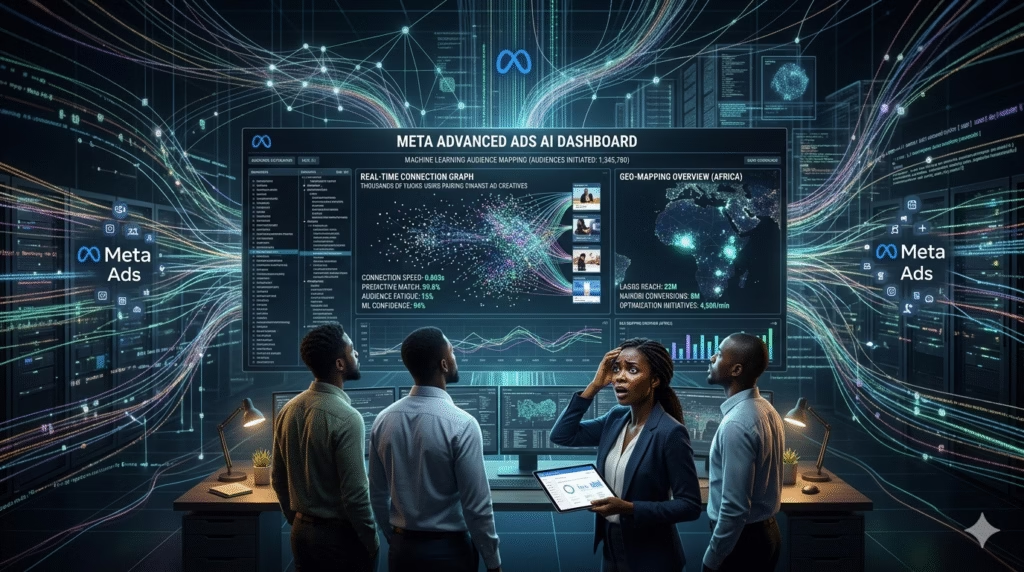
What worked a few years ago does not work the same way today because Meta is no longer a platform that rewards heavy manual control. It now operates more like an AI-driven prediction engine that constantly adjusts delivery based on signals advertisers cannot fully see.
That is why:
- some days your ads overspend
- other days delivery slows down
- performance suddenly drops without warning
- campaigns behave differently even with similar settings
- manual optimizations sometimes make no difference at all
And perhaps the most frustrating part is this:
When results decline, advertisers often blame themselves immediately as if they clearly “missed something.”
In reality, Meta Ads today are far more probabilistic than predictable.
That does not mean strategy no longer matters. It means the game has changed.
Why Meta Ads Feel So Different Today
A few years ago, Meta rewarded advertisers who controlled everything manually.
You could:
- stack interests
- narrow audiences
- aggressively optimize targeting
- duplicate winning ad sets
- scale through precise adjustments
Today, Meta’s algorithm handles most of those decisions internally.
The system now prioritizes:
- machine learning
- behavioral prediction
- real-time auction analysis
- automated delivery optimization
This creates a major psychological shift for advertisers because the platform often feels like a “black box.”
You input:
- creatives
- budgets
- audiences
- objectives
But Meta ultimately decides:
- who sees the ad
- when they see it
- how aggressively to spend
- what audience segments expand into
And much of that happens invisibly.

The Biggest Misunderstanding About Meta Ads
Most advertisers still think Meta Ads are mainly about targeting.
They are not.
Modern Meta advertising is increasingly driven by:
- Creative quality
- Offer strength
- User behavior signals
- Conversion feedback loops
This is why broad targeting frequently outperforms detailed targeting now.
Meta has become extremely good at finding buyers when given enough data.
Your creative often acts as the targeting itself.
For example:
A video about:
- luxury skincare
- beginner fitness
- legal services
- real estate investing
already signals who is most likely to engage.
The algorithm studies:
- watch time
- clicks
- engagement behavior
- scrolling patterns
- conversion likelihood
and adjusts delivery automatically.
That is why advertisers sometimes see broad audiences outperform carefully narrowed interests.

Why Performance Feels Inconsistent
This is the part many people struggle to accept:
Meta Ads are no longer stable in the way they once were.
Several things constantly affect performance behind the scenes:
1. Auction Competition Changes Daily
You are not advertising in isolation.
Your results depend on:
- competitors increasing budgets
- seasonal demand
- market trends
- holidays
- news cycles
- consumer spending behavior
One week your CPMs are low.
The next week another advertiser enters aggressively and costs spike.
2. User Behavior Changes Constantly
People behave differently depending on:
- time of day
- salary cycles
- economic pressure
- emotional state
- trends
- device usage habits
Even strong campaigns naturally fluctuate.
3. Attribution Is Imperfect
Tracking is less accurate today because:
- users switch devices
- privacy restrictions limit data
- browsers block tracking
- attribution windows are incomplete
This means:
- some conversions are missed
- some results appear delayed
- reported ROAS may not reflect total impact

4. Creative Fatigue Happens Faster Than Before
Audiences consume massive amounts of content daily.
A creative that performs well today can lose effectiveness quickly simply because users become psychologically numb to it.
This is why creative testing has become more important than endless audience testing.
What Finally “Clicks” for Most Successful Advertisers
At some point, experienced advertisers stop trying to control every variable.
Instead, they build systems.
That shift changes everything.
Here’s What Actually Matters Now
1. Strong Creative Volume
Winning advertisers produce a lot of creatives.
Not because every ad works.
But because Meta rewards fresh engagement signals.
Modern advertising is often a creative testing game more than a targeting game.
2. Better Offers
Many campaigns fail because:
- the offer is weak
- the positioning is unclear
- the product lacks urgency
- the value proposition is generic
A mediocre campaign with a strong offer often outperforms a technically perfect campaign with a weak offer.

3. Fewer Manual Adjustments
One of the biggest mistakes advertisers make is constantly interfering with campaigns.
Frequent edits can:
- reset learning
- destabilize delivery
- confuse optimization patterns
Sometimes the best decision is patience.
4. Looking at Weekly Trends Instead of Daily Emotions
Meta performance fluctuates naturally.
Judging campaigns emotionally every 24 hours creates unnecessary panic.
Smart advertisers analyze:
- 7-day trends
- blended CPA
- overall profitability
- customer acquisition efficiency
instead of reacting to every bad day.
5. Understanding That Meta Is Probabilistic
This is perhaps the hardest lesson.
Meta Ads are not a vending machine.
You cannot always predict:
- spend patterns
- delivery spikes
- conversion timing
- audience behavior
The platform operates on probabilities, not guarantees.
Once advertisers understand this, they stop expecting perfect consistency and start focusing on scalable systems instead.
So… Are You Doing Something Wrong?
Maybe.
But probably not in the way you think.
Most struggling advertisers are not failing because they forgot some secret targeting trick.
Usually the issue is:
- weak creative systems
- inconsistent testing frameworks
- poor offers
- emotional optimization decisions
- unrealistic expectations of stability
And sometimes?
The market is simply noisy.
That is normal now.

The Future of Meta Ads
The advertisers who will dominate over the next few years are not necessarily the ones with the most technical hacks.
They are the ones who:
- create better creatives faster
- understand customer psychology deeply
- build stronger offers
- analyze data calmly
- adapt quickly without panicking
Meta is increasingly automated.
That trend will continue.
The real competitive advantage is no longer “beating the algorithm.”
It is learning how to feed the algorithm the strongest possible signals.
Final Thoughts
If Meta Ads feel confusing right now, you are not alone.
Even experienced media buyers struggle with:
- inconsistent performance
- rising costs
- unstable delivery
- unpredictable scaling
The platform has evolved dramatically.
The good news is this:
Once you stop chasing total control and start focusing on:
- creative quality
- offer strength
- testing systems
- long-term data
things begin to make much more sense.
Meta Ads today are less about controlling every lever and more about building a machine that can survive uncertainty.
And once that mindset clicks, the platform becomes far less frustrating.
Need help improving your Meta Ads strategy or business growth systems?
Visit Neksas Digital for Meta Ads management, web design, SEO, and digital marketing services.
