
If you’ve ever boosted a Facebook post, watched the likes roll in, and then wondered why none of it turned into actual sales, you’re not alone. It’s one of the most common frustrations we hear from small business owners across Nairobi: “I’m spending money on ads every month, but I can’t tell what’s working.”
Most of the time, the problem isn’t the budget or the creative. It’s the structure.
Businesses that succeed with Meta ads, Facebook and Instagram combined, don’t run one big campaign trying to do everything at once. They run a small number of clearly separated campaigns, each built around one specific business goal, each with its own audience logic and its own creative approach. That’s the difference between an account that burns cash and one that compounds.
This guide breaks down exactly how that structure works, using the same framework we apply as a Meta ads agency in Nairobi managing campaigns for Kenyan SMEs — service businesses, e-commerce shops, and local retail brands. By the end, you’ll understand how to structure your own campaigns properly, what mistakes are quietly draining your budget, when it’s time to scale, and roughly what it costs to have this managed for you if you’d rather hand it off.
Let’s start with why most Facebook ad accounts in Kenya are set up wrong from day one.
Why Most Facebook Ad Campaigns in Kenya Fail
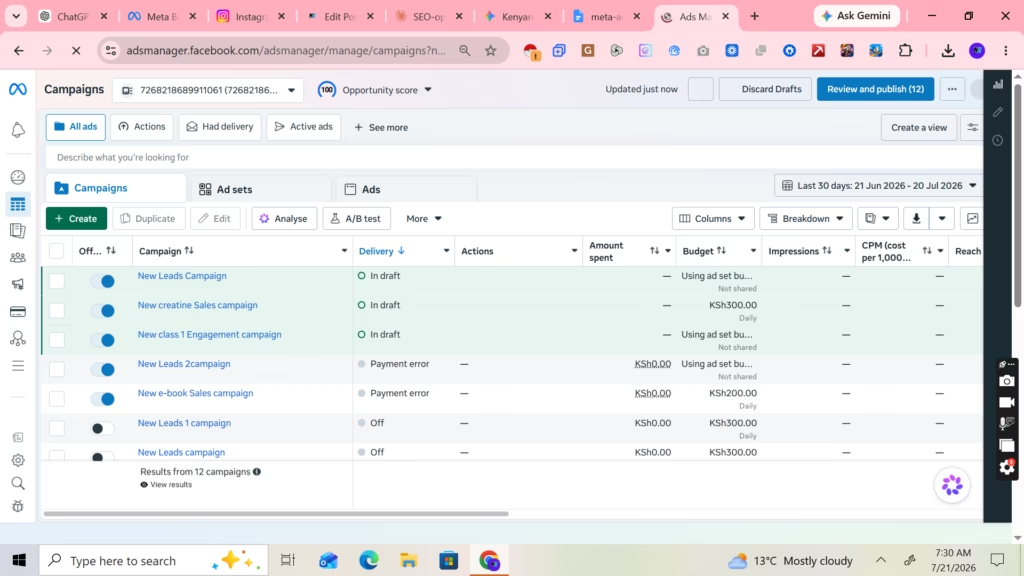
Walk through the Ads Manager account of almost any Kenyan SME that’s “tried Facebook ads and it didn’t work,” and you’ll usually find the same pattern: one campaign, one ad set, one audience, one creative — trying to generate leads, drive sales, and build brand awareness all at the same time.
That’s the core problem. A single campaign can’t optimize for three different outcomes simultaneously. Meta’s algorithm needs a clear objective to know who to show your ad to. When the goal is muddled, the algorithm guesses — and it usually guesses wrong, spending your budget on people who like and comment but never buy or enquire.
Here are the specific mistakes we see most often when auditing Facebook ads accounts for Kenyan small businesses:
Running too many campaigns with tiny budgets spread thin. Some business owners create five or six campaigns at once, each getting KES 500–1,000 a day. None of them ever get enough data to leave Meta’s learning phase, so none of them ever really perform.
Targeting audiences that are too small. A common instinct is to “niche down” so specifically that Meta struggles to find enough people to show the ad to. In the Kenyan context, an audience under roughly 50,000–100,000 people is often too narrow for reliable delivery, especially outside Nairobi.
Using only one creative. One image, run for weeks, until it’s exhausted and performance quietly declines. Ad fatigue is real, and Kenyan audiences on data-conscious connections scroll fast — a single creative gets tired within days, not months.
Editing the campaign daily. Constantly changing budgets, audiences, or creatives resets Meta’s learning phase every time. The algorithm needs roughly 3–7 days of stable data to start optimizing properly. Businesses that panic and tweak daily never let it work.
No pixel or conversion tracking installed. Without the Meta Pixel (or Conversions API) properly set up, you have no idea which ads are actually driving website visits, form fills, or purchases — you’re optimizing blind.
A weak or mismatched landing page. Even a perfectly targeted, well-designed ad will underperform if it sends someone to a slow website, a page with no clear next step, or — worse — just your homepage.
Choosing the wrong objective entirely. Selecting “Engagement” when you actually want sales trains Meta to find people who like and comment, not people who buy. This single mismatch quietly wastes more Kenyan ad budgets than almost anything else on this list.
Every one of these is fixable. The fix starts with a principle that’s easy to state and surprisingly rare in practice: start with your business goal, not the platform.
The Foundation: Start With Your Business Goal, Not the Platform
Before you open Ads Manager, before you write a single word of ad copy, answer one question: what is this campaign actually for?
Not “more visibility” or “more engagement” — a specific, measurable business outcome. Do you need people to fill in a form or message you on WhatsApp? Do you need people to buy a product on your website or via M-Pesa? Or are you building awareness for a new brand that nobody in Nairobi has heard of yet?
Different goal, different campaign. That’s the entire foundation of a properly structured Meta ads account, and it’s the single biggest shift in thinking that separates businesses that get results from those that don’t.
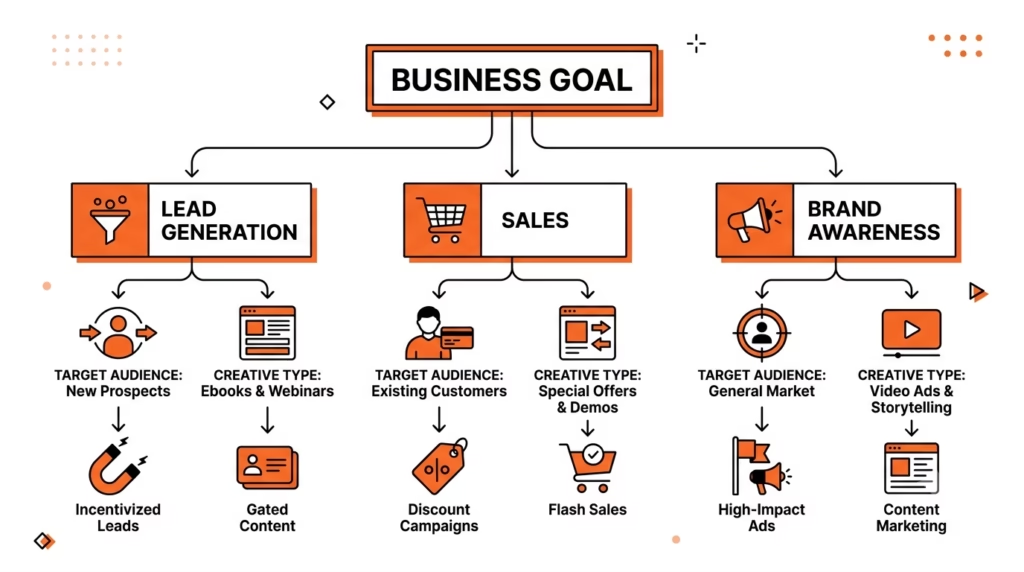
In practice, almost every Kenyan SME’s advertising needs fall into one of three goals:
- Lead Generation — get people to raise their hand: fill a form, send a WhatsApp message, book a call.
- Sales / Purchases — get people to buy, usually via a website or online store.
- Brand Awareness — get people to know you exist and remember you, usually because you’re new or building a longer-term presence.
Each of these needs its own campaign, with its own audience approach and its own creative style. Trying to force all three into one campaign is exactly why so many Facebook ad accounts in Kenya underperform. Let’s go through each one properly.
The 3-Campaign Structure That Works for Kenyan SMEs
This is the core framework — the same structure we build out for clients as a Meta ads agency in Nairobi, adapted to whatever stage a business is at.
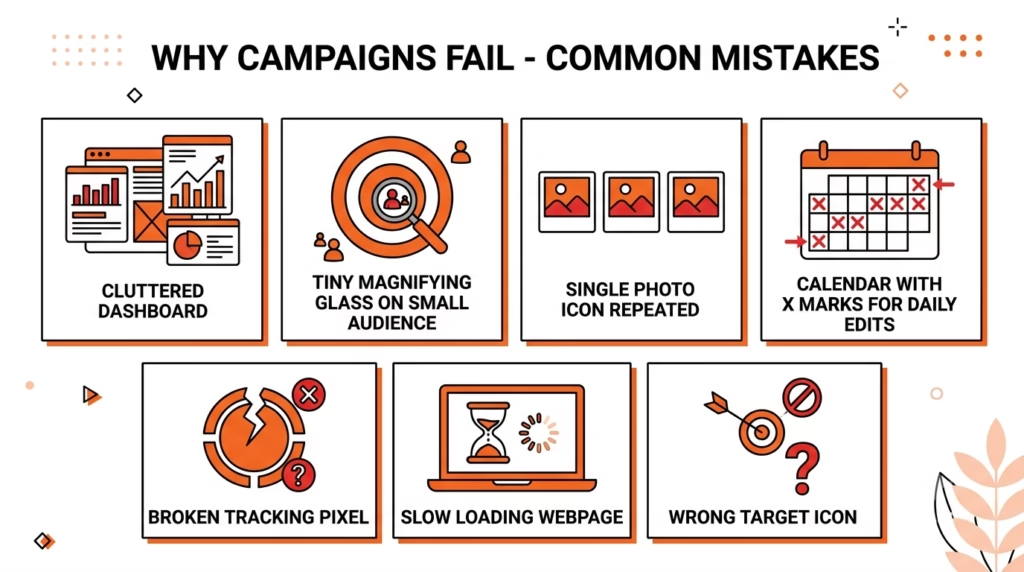
Campaign 1: Lead Generation
Best for: service businesses, clinics, real estate, law firms, consultants, training providers, salons taking bookings — any business where the sale happens after a conversation, not instantly on a website.
Ad sets to run:
- Broad Audience — minimal targeting restrictions, letting Meta’s algorithm find people likely to convert based on your creative and objective
- Lookalike Audience — built from your existing customer list or website visitors, finding new people who resemble your best customers
- Existing Customers — for upsells, referrals, or re-engagement campaigns
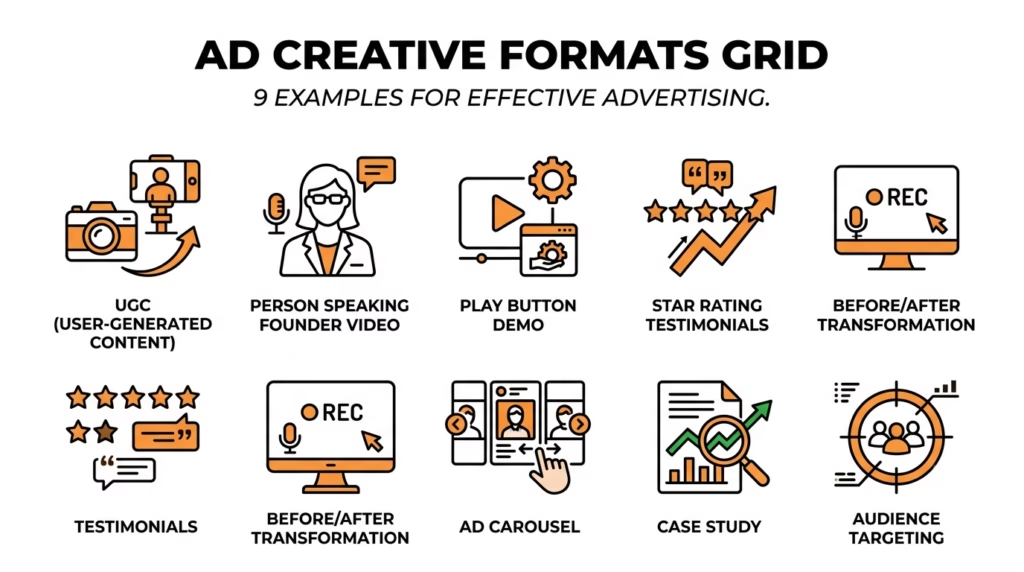
Creative needs: 3–5 winning creatives across a mix of image, video, carousel, and UGC (user-generated content — real customers or staff talking about the business, not polished studio production). For lead generation specifically, video that explains what you do in under 30 seconds tends to outperform static images because it pre-qualifies the viewer before they click.
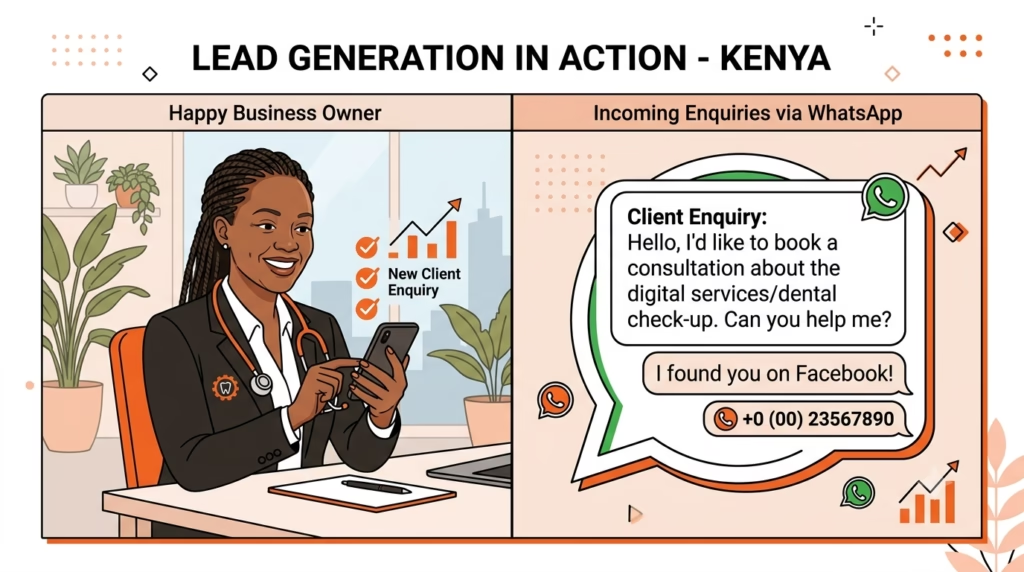
A Nairobi example: a dental clinic running a lead generation campaign with a lead form ad — “Book a free consultation” — connected directly to WhatsApp, targeting a broad Nairobi audience plus a lookalike built from past patients. The ad set that performs best over the first two weeks gets more budget; the others get paused or refreshed.
Campaign 2: Sales / Purchases
Best for: e-commerce stores, product-based retail, fashion, beauty, anything where a customer can complete a purchase without needing to speak to anyone first.
Ad sets to run:
- Broad Audience — for top-of-funnel discovery
- Retargeting — people who visited your site or engaged with your Instagram but didn’t buy; this is usually your highest-converting, lowest-cost audience
- High Intent Audience — people who added to cart, viewed a product page, or started checkout but abandoned
Creative needs: offers (discounts, bundles, limited stock), testimonials, and social proof (reviews, unboxing videos, before/after where relevant). For Kenyan e-commerce specifically, showing the actual product being used or worn by a real person — not a stock photo — consistently performs better, because it builds the trust that’s often missing before a first-time online purchase.
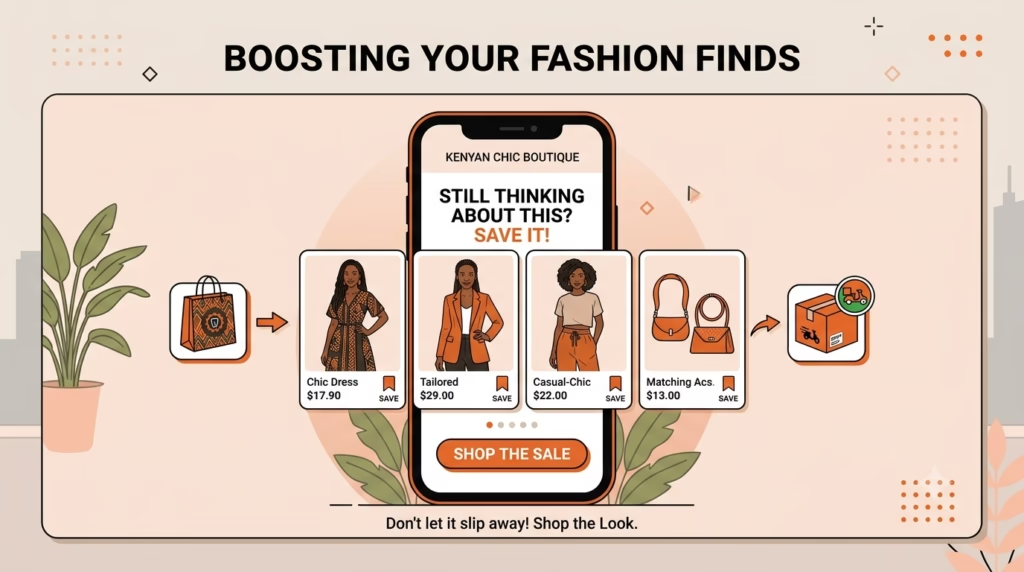
A retail example: an online fashion boutique in Nairobi running a sales campaign with retargeting ads showing “still thinking about this?” carousel ads to cart-abandoners, alongside a broad awareness-to-purchase campaign showcasing new arrivals with customer reviews layered into the creative.
Campaign 3: Brand Awareness
Best for: new businesses without an existing audience, personal brands, NGOs, and anyone building longer-term visibility rather than an immediate transaction.
Ad sets to run:
- Broad Audience — casting wide to build initial recognition
- Video Viewers — people who’ve watched a meaningful portion of your previous video content, now warmed up for deeper engagement
- Engaged Audience — people who’ve interacted with your Page or Instagram profile before
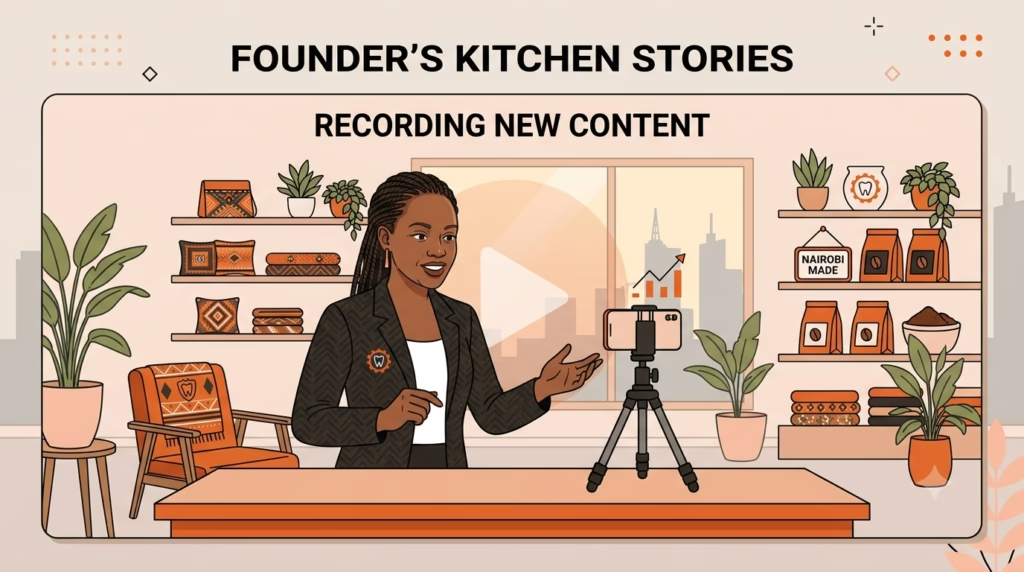
Creative needs: educational content, storytelling (founder story, behind-the-scenes, mission-driven content), and authority-building content (case studies, results, credentials).
This is usually the campaign businesses skip — and it’s often the one that makes Campaigns 1 and 2 cheaper over time, because a warmer, more familiar audience converts at a lower cost than a completely cold one.
Audience Hierarchy: How to Structure Targeting the Right Way
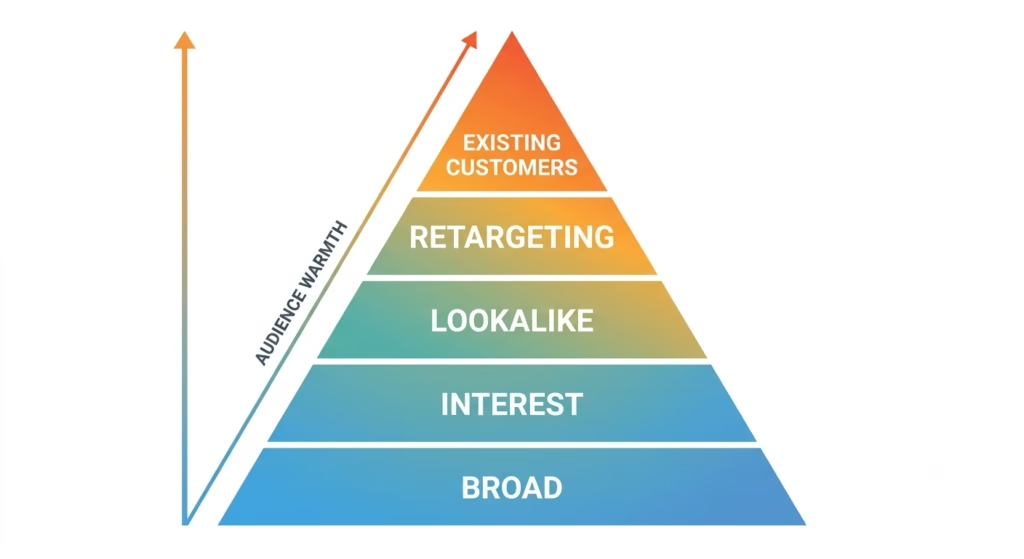
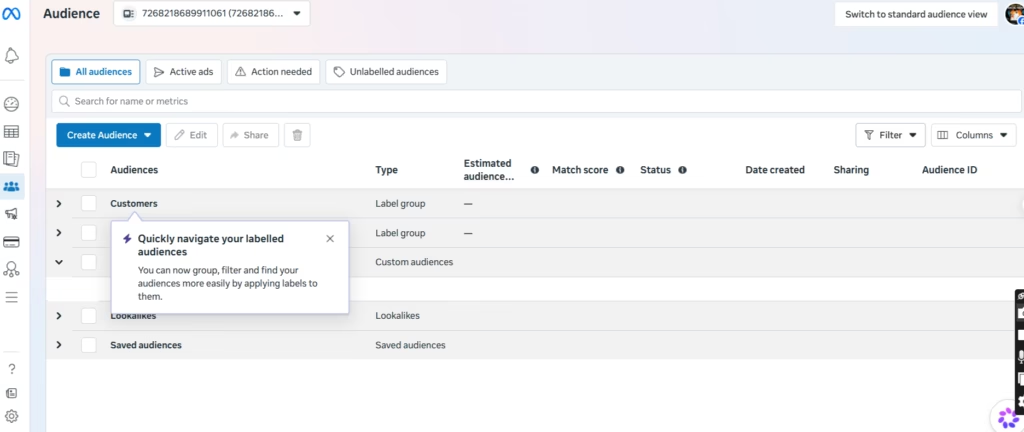
Underneath all three campaigns sits a consistent audience hierarchy, moving from coldest to warmest:
Broad → Interest-Based → Lookalike → Retargeting → Existing Customers
Most Kenyan advertisers skip straight to boosting a post with vague interest targeting and never build out the rest of the hierarchy. That’s a missed opportunity, because your warmest audiences — retargeting and existing customers — are almost always your cheapest and highest-converting, yet they only exist once you’ve built the funnel that feeds them.
A practical note for the Kenyan market specifically: keep audience sizes above roughly 50,000–100,000 people at the interest and lookalike stages. Go too narrow and Meta struggles to deliver efficiently; go too broad without enough creative variety and you’ll burn budget on irrelevant impressions. The sweet spot is usually broader targeting paired with strong creative that self-selects the right viewer — letting the ad’s messaging do the filtering, rather than over-restricting the audience itself.
Creative Types That Perform (with Kenyan Context)
Across hundreds of ad sets we’ve managed for Kenyan businesses, a consistent pattern shows up in what actually performs:
- UGC (user-generated content) — real people, real reactions, minimal production. Consistently outperforms polished studio content for cost per result.
- Founder video — a business owner speaking directly to camera builds trust fast, especially for service businesses where the sale depends on credibility.
- Demo videos — showing the product or service in actual use, not described in text.
- Testimonials — short, specific, and ideally on-camera rather than written screenshots.
- Problem/solution format — naming the exact frustration your audience has, then showing your product or service as the fix.
- Before/after — powerful for beauty, fitness, home services, and visible transformations.
- Screen recordings — especially effective for digital products, courses, or app-based services.
- Carousels — good for showcasing a product range or walking through a multi-step process.
One factor matters more than the format itself: creative and audience quality directly determine your cost per click and cost per impression. Weak, generic creative pushed to a poorly matched audience costs significantly more per result than sharp, specific creative shown to the right people — the gap in cost-per-lead between the two can easily be two to three times. This is exactly why the “3–5 winning creatives” guidance from the lead generation campaign above isn’t a nice-to-have — it’s the difference between a campaign that’s profitable and one that isn’t.
Given how much data-conscious scrolling shapes attention on Kenyan connections, favor short, punchy video (15–30 seconds) and carousels over long-form or static-only creative wherever possible.
Optimization Flow: What to Check and When
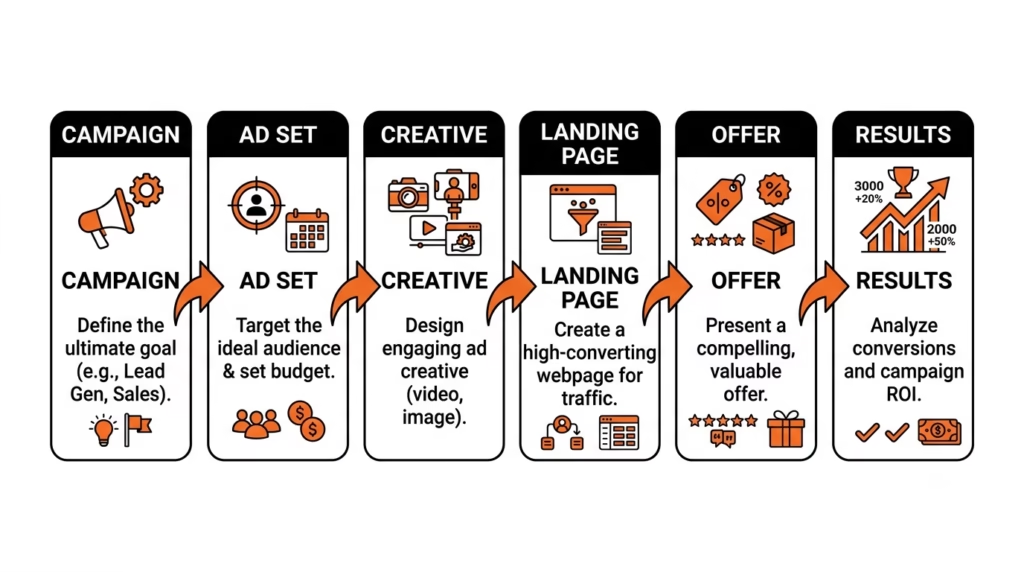
When a campaign underperforms, most business owners jump straight to changing the creative — often the wrong first move. There’s a proper diagnostic order to work through:
Campaign → Ad Set → Creative → Landing Page → Offer → Results
- Campaign level — is the objective actually matched to the business goal? (This alone fixes a surprising number of “broken” campaigns.)
- Ad set level — is the audience large enough, and has it had enough time (5–7 days minimum) to exit the learning phase?
- Creative level — is there enough creative variety, and has the current creative been running long enough to show fatigue (rising frequency, falling CTR)?
- Landing page level — does the page load fast, match the ad’s promise, and have one clear next step?
- Offer level — is the offer itself compelling enough, independent of how well the ad is targeted or designed?
- Results — only once the above are ruled out should you conclude the fundamental offer or market fit is the issue.
Working through this order before making changes prevents the common trap of “fixing” the wrong layer — for example, rewriting ad copy for the fifth time when the real problem is a slow-loading landing page.
When to Scale a Campaign (and When Not To)
Scaling too early is one of the fastest ways to waste a working campaign. Before increasing budget, check for these signals:
- CPA (cost per acquisition) is stable — not still fluctuating wildly day to day
- CTR (click-through rate) is above your account’s benchmark — a sign the creative and audience match well
- Frequency is healthy — generally under 2–3 for most Kenyan audience sizes; higher suggests the audience is seeing the ad too often and fatigue is setting in
- Conversion rate is high relative to your industry norm
- ROAS (return on ad spend) is positive and consistent, not a single lucky day
On that last point, it’s worth understanding what “positive” actually means in practice. ROAS of 1:1 means you’re breaking even on ad spend alone — before product costs, so you’re still losing money overall. A ROAS of 2:1 is marginal once product costs are factored in. Around 3:1 is generally healthy for most Kenyan SMEs, and 4:1 or higher is strong enough to scale aggressively — provided the rest of the business (delivery, stock, customer service) can actually handle the extra volume.
When these signals are in place, scale gradually — increasing budget by roughly 20–30% every few days rather than doubling it overnight, which can reset the learning phase and temporarily spike costs.
Not Sure What to Budget? Use the Free Meta Ads Calculator
Before committing to a monthly ad spend, it helps to know roughly what results that budget can realistically produce in the Kenyan market — because Meta advertising costs here differ meaningfully from what you’ll read in generic, US-focused guides.
We built a free Meta Ads Budget Calculator specifically calibrated for Kenyan benchmarks. You input your monthly budget (or your target number of leads/sales), your campaign objective, your industry, and your target location, and it projects expected reach, cost per lead, and ROAS based on aggregated data from real Kenyan campaigns.
A few benchmark figures worth knowing before you set a budget:
- Lead generation campaigns in Kenya typically run KES 80–400 cost per lead, depending on industry — real estate and professional services sit at the higher end due to higher ticket value, while education and training tend to convert more cheaply thanks to clearer, more urgent value propositions.
- Nairobi-only targeting costs roughly 40–80% more to reach than national targeting — but converts at two to three times the rate for premium products and services. For mass-market products, national targeting is usually the more profitable choice.
- A monthly budget under roughly KES 15,000 rarely generates enough data for Meta’s algorithm to optimize properly — it needs a meaningful volume of weekly conversions to learn who to target.
Running your own numbers through the calculator before choosing a management package below gives you a realistic budget in mind — so the pricing that follows is grounded in your actual goals, not a guess.
Why Work With a Meta Ads Agency Instead of DIY
Everything above is genuinely learnable — plenty of Kenyan business owners run their own ads successfully once they understand the structure. But there’s a real cost to the learning curve: weeks (often months) of trial and error, wasted budget on the mistakes covered earlier in this guide, and time pulled away from actually running the business.
A Meta ads agency in Nairobi that understands the local market brings a few things a generic tutorial or overseas freelancer typically can’t:
- Local audience behavior — how Kenyan consumers actually respond to ad formats, offers, and messaging, which differs meaningfully from Western benchmarks
- Payment friction awareness — understanding how M-Pesa checkout flows affect conversion rates, and structuring campaigns and landing pages around that reality
- Realistic cost expectations — knowing what CPM, CPC, and CPL actually look like here, rather than panicking over numbers that are normal for this market but would look alarming compared to US benchmarks
- Faster iteration — a team running multiple accounts daily spots underperformance and fixes it in days, not the weeks it might take a business owner checking in occasionally between everything else they’re managing
That’s the gap Neksas Digital fills for Kenyan SMEs — building and managing the exact 3-campaign structure covered in this guide, tailored to your specific business goal, industry, and budget.
Meta Ads Management Cost in Kenya: Our Packages
Here’s how much this typically costs when it’s managed for you, broken into three tiers based on how much creative, targeting sophistication, and hands-on optimization your business needs.
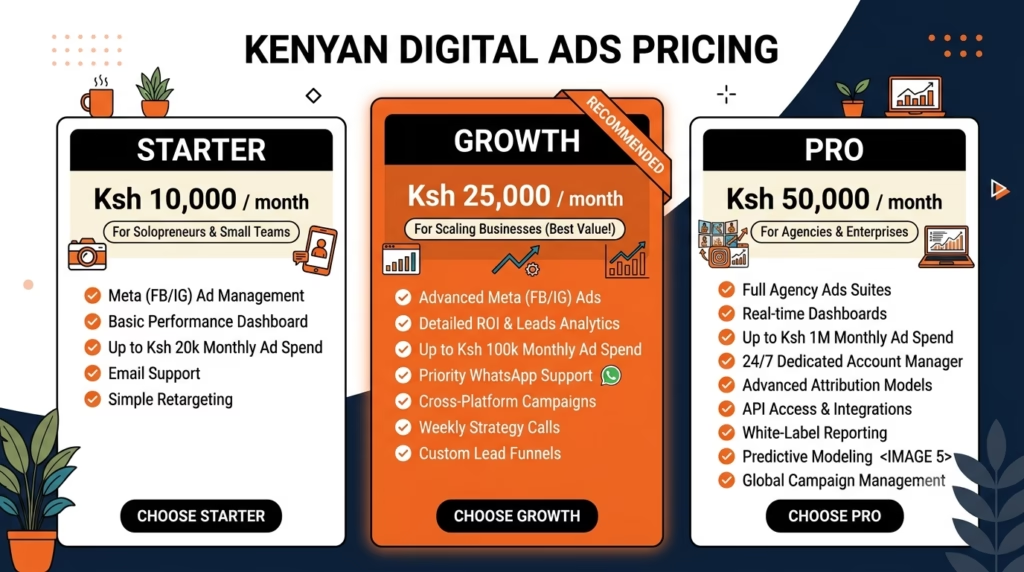
Before comparing tiers, it’s worth separating two things that often get confused: ad spend the money paid directly to Meta to actually run the ads and the management fee what you pay an agency to plan, build, and optimize the campaigns. The packages below cover management; ad spend is separate and is entirely in your control, guided by the calculator above.
| Package | Price (per month) | What’s Included |
|---|---|---|
| Starter Plan | KES 25,000 | Campaign setup (Meta or Google), up to 2 ad creatives, basic targeting and audience setup, monthly performance report |
| Growth Plan (Recommended) | KES 40,000 | Full setup and management (Meta and Google combined), up to 5 ad creatives, advanced audience targeting, weekly optimization and reporting |
| Pro Plan | KES 65,000 | Multi-channel campaign management, unlimited ad creatives, retargeting campaigns, dedicated account manager, bi-weekly reporting and strategy calls |
The Starter Plan suits a business testing paid ads for the first time — enough setup and structure to do it properly without over-committing before you’ve validated the offer.
The Growth Plan is where most of our Kenyan SME clients land, because it matches the full 3-campaign structure covered in this guide — enough creative volume and weekly optimization to run Lead Generation, Sales, or Awareness campaigns properly rather than as a single stripped-down effort.
The Pro Plan fits businesses ready to run more than one campaign type simultaneously — for example, a Lead Generation campaign for services alongside a Sales campaign for a product line — with the dedicated attention and reporting cadence that requires.
Custom plans are also available if none of the three fit exactly — chat with us on WhatsApp to talk through a build tailored to your business.
A quick note on results and timeline
our process follows four steps — Research (audience mapping, competitor and pixel checks), Build (account structure, creative, audience setup), Launch (budget-split testing across creative, audience, and placement with guardrails), and Optimize (weekly iteration on bids, negatives, creatives, and landing pages). Most clients see measurable movement — lower CPA, better ROAS, cleaner attribution — within 2–6 weeks, not overnight, which lines up with the learning-phase and optimization timelines covered earlier in this guide.
Real examples from Kenyan brands we’ve worked with: a services-based lead gen client cut CPA by 38% within 45 days through refined audience and creative testing; an e-commerce client reached 3.2x ROAS over 60 days by pairing catalog ads with weekly creative refreshes; a local retail business saw a 71% increase in store visits through geo-targeted reach combined with Google Business Profile and Maps optimization.
Facebook Ads vs Google Ads: Which Should Your Kenyan Business Use?
This comes up in nearly every strategy conversation, so it’s worth a direct answer.
Meta (Facebook and Instagram) tends to win when:
- Your product or service is visually demonstrable (fashion, food, home goods, beauty)
- You’re building brand awareness before demand exists
- You want to retarget past website visitors or engaged social followers
- Your sale benefits from social proof and storytelling
Google Ads tends to win when:
- Someone is already actively searching for what you sell (“plumber near me,” “law firm Nairobi”) — high-intent search traffic converts fast because the need already exists
- You’re competing on availability or immediacy rather than persuasion
For many Kenyan SMEs, the honest answer is both — Google captures people already looking for you, while Meta builds the awareness and retargeting layer that brings people to that search in the first place. This is part of why our Growth and Pro packages above combine management across both platforms rather than treating them as separate services.
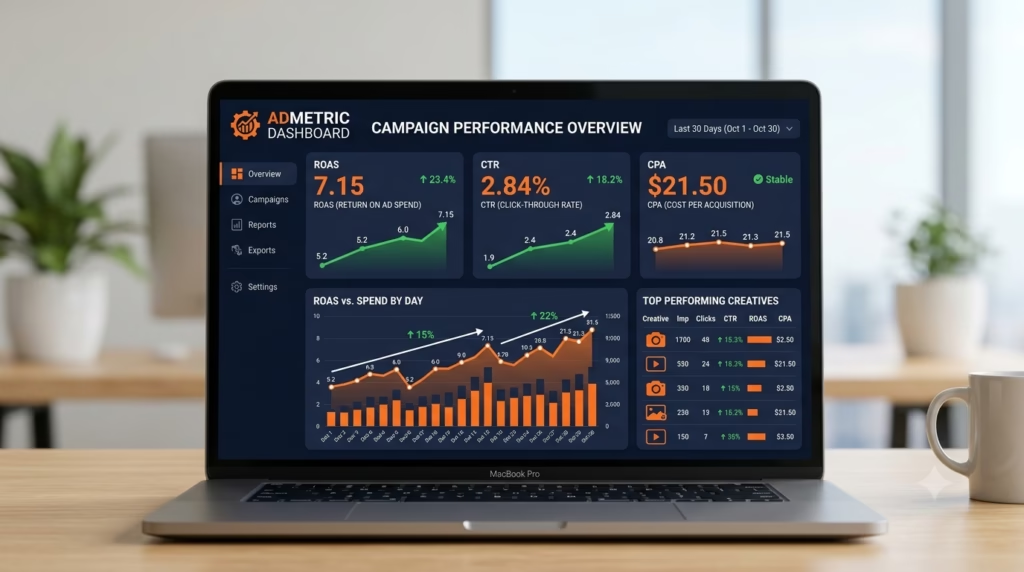
Meta Ads FAQs for Kenyan Businesses
What budget do I need to get started?
There’s no universal number, but as a floor, budgets under roughly KES 15,000/month rarely generate enough weekly conversions for Meta’s algorithm to optimize properly. Most Kenyan SMEs testing paid ads for the first time start in the KES 15,000–30,000 range, then scale once a campaign proves it can hit a stable, profitable CPA. Run your specific numbers through the budget calculator for a projection based on your industry and goal.
How fast can I see results?
Expect the first 3–7 days to be a learning phase, where costs are typically higher and less stable as Meta’s algorithm gathers data. Meaningful, measurable improvement — lower cost per result, clearer winning creatives and audiences — usually shows up within 2–6 weeks of consistent, unedited campaign running.
Which platform is better for me — Meta or Google?
It depends on your sale. If people already search for what you offer, Google captures that demand directly. If your product is visual or you’re building awareness from scratch, Meta usually performs better. See the comparison section above for a fuller breakdown — many businesses ultimately benefit from running both.
Who makes the ad creatives?
As part of our management packages, we handle creative direction and production — from UGC-style content to carousels and video — based on the winning formats covered in this guide. Businesses that already have strong existing content (product photography, testimonials, founder video) can also supply assets for us to adapt into ad-ready formats.
Do you help with landing pages?
Yes. Since the optimization flow above shows landing pages are often the real bottleneck behind an underperforming campaign, our management includes reviewing — and where needed, improving — the page your ads send traffic to, so the campaign isn’t undermined by a weak final step.
How do you report on performance?
Reporting cadence depends on your plan — monthly for Starter, weekly for Growth, and bi-weekly strategy calls alongside ongoing reporting for Pro. Reports track the same core metrics covered in this guide: CPA, CTR, frequency, conversion rate, and ROAS, so you always know exactly where budget is going and what it’s producing.
What if my ads aren’t profitable?
We work through the same optimization flow outlined earlier — checking campaign objective, audience, creative, landing page, and offer in that order before recommending a pause or a rebuild. Transparency matters here: if a campaign genuinely isn’t working after a fair testing period, we’ll tell you directly rather than continuing to spend budget on something that isn’t converting.
Are there any long-term contracts?
No long lock-in contracts are required — plans run monthly, so you can adjust or pause based on results rather than being tied into a long commitment upfront.
Getting Started
The core idea behind everything in this guide is simple, even if the execution takes some discipline: different goal, different campaign. Stop trying to make one Facebook ad do the job of three. Build Lead Generation, Sales, and Brand Awareness as separate, properly structured campaigns — each with the right audience hierarchy and creative approach — and you’ll spend less to get more, whether you’re managing it yourself or handing it off entirely.
If you’d rather skip the trial-and-error and have this built and managed properly from day one, we’re here for that. Chat with Neksas Digital on WhatsApp for a free Meta ads audit — we’ll look at what you’re currently running (or help you plan from scratch if you’re starting fresh) and map out which of the three campaign types your business actually needs first.
